
Bill McKibben
Bill McKibben is the author of Eaarth, The End of Nature, Deep Economy, Enough, Fight Global Warming Now, The Bill McKibben Reader, and numerous other books. He is the founder of the environmental organizations Step It Up and 350.org, and was among the first to warn of the dangers of global warming. In 2010 The Boston Globe called him "probably the nation's leading environmentalist," and Time magazine has called him "the world's best green journalist." He studied at Harvard, and started his writing career as a staff writer at The New Yorker. The End of Nature, his first book, was published in 1989 and was regarded as the first book on climate change for a general audience. He is a frequent contributor to magazines and newspapers including The New York Times, The Atlantic Monthly, Harper's, Orion Magazine, Mother Jones, The New York Review of Books, Granta, Rolling Stone, and Outside. He has been awarded Guggenheim Fellowship and won the Lannan Prize for nonfiction writing in 2000. He is a scholar in residence at Middlebury College and lives in Vermont with his wife, the writer Sue Halpern, and their daughter. http://us.macmillan.com/author/billmc...
27 Books Written

Falter: Has the Human Game Begun to Play Itself Out?
by Bill McKibben
Rating: 4.0 ⭐
• 2 recommendations ❤️
Thirty years ago Bill McKibben offered one of the earliest warnings about climate change. Now he broadens the warning: the entire human game, he suggests, has begun to play itself out.Bill McKibben’s groundbreaking book The End of Nature -- issued in dozens of languages and long regarded as a classic -- was the first book to alert us to global warming. But the danger is broader than that: even as climate change shrinks the space where our civilization can exist, new technologies like artificial intelligence and robotics threaten to bleach away the variety of human experience.Falter tells the story of these converging trends and of the ideological fervor that keeps us from bringing them under control. And then, drawing on McKibben’s experience in building 350.org, the first truly global citizens movement to combat climate change, it offers some possible ways out of the trap. We’re at a bleak moment in human history -- and we’ll either confront that bleakness or watch the civilization our forebears built slip away.Falter is a powerful and sobering call to arms, to save not only our planet but also our humanity.

Our old familiar globe is suddenly melting, drying, acidifying, flooding, and burning in ways that no human has ever seen. We've created, in very short order, a new planet, still recognizable but fundamentally different. We may as well call it Eaarth.That new planet is filled with new binds and traps. A changing world costs large sums to defend--think of the money that went to repair New Orleans, or the trillions it will take to transform our energy systems--but the endless economic growth that could underwrite such largesse depends on the stable planet we've managed to damage and degrade. We can't rely on old habits any longer.Our hope depends, McKibben argues, on scaling back—on building the kind of societies and economies that can hunker down, concentrate on essentials, and create the type of community (in the neighborhood but also on the internet) that will allow us to weather trouble on an unprecedented scale. Change—fundamental change—is our best hope on a planet suddenly and violently out of balance.

The bestselling author of The End of Nature issues an impassioned call to arms for an economy that creates community and ennobles our livesIn this powerful and provocative manifesto, Bill McKibben offers the biggest challenge in a generation to the prevailing view of our economy. For the first time in human history, he observes, “more” is no longer synonymous with “better”—indeed, for many of us, they have become almost opposites. McKibben puts forward a new way to think about the things we buy, the food we eat, the energy we use, and the money that pays for it all. Our purchases, he says, need not be at odds with the things we truly value.McKibben’s animating idea is that we need to move beyond “growth” as the paramount economic ideal and pursue prosperity in a more local direction, with cities, suburbs, and regions producing more of their own food, generating more of their own energy, and even creating more of their own culture and entertainment. He shows this concept blossoming around the world with striking results, from the burgeoning economies of India and China to the more mature societies of Europe and New England. For those who worry about environmental threats, he offers a route out of the worst of those problems; for those who wonder if there isn’t something more to life than buying, he provides the insight to think about one’s life as an individual and as a member of a larger community.McKibben offers a realistic, if challenging, scenario for a hopeful future. As he so eloquently shows, the more we nurture the essential humanity of our economy, the more we will recapture our own.

Reissued on the tenth anniversary of its publication, this classic work on our environmental crisis features a new introduction by the author, reviewing both the progress and ground lost in the fight to save the earth.This impassioned plea for radical and life-renewing change is today still considered a groundbreaking work in environmental studies. McKibben's argument that the survival of the globe is dependent on a fundamental, philosophical shift in the way we relate to nature is more relevant than ever. McKibben writes of our earth's environmental cataclysm, addressing such core issues as the greenhouse effect, acid rain, and the depletion of the ozone layer. His new introduction addresses some of the latest environmental issues that have risen during the 1990s. The book also includes an invaluable new appendix of facts and figures that surveys the progress of the environmental movement.More than simply a handbook for survival or a doomsday catalog of scientific prediction, this classic, soulful lament on Nature is required reading for nature enthusiasts, activists, and concerned citizens alike.

"I hope no one secedes, but I also hope that Americans figure out creative ways to resist injustice and create communities where everybody counts. We've got a long history of resistance in Vermont and this book is testimony to that fact." -Bernie Sanders A book that's also the beginning of a movement, Bill McKibben's debut novel Radio Free Vermont follows a band of Vermont patriots who decide that their state might be better off as its own republic. As the host of Radio Free Vermont--"underground, underpowered, and underfoot"--seventy-two-year-old Vern Barclay is currently broadcasting from an "undisclosed and double-secret location." With the help of a young computer prodigy named Perry Alterson, Vern uses his radio show to advocate for a simple yet radical idea: an independent Vermont, one where the state secedes from the United States and operates under a free local economy. But for now, he and his radio show must remain untraceable, because in addition to being a lifelong Vermonter and concerned citizen, Vern Barclay is also a fugitive from the law. In Radio Free Vermont, Bill McKibben entertains and expands upon an idea that's become more popular than ever--seceding from the United States. Along with Vern and Perry, McKibben imagines an eccentric group of activists who carry out their own version of guerilla warfare, which includes dismissing local middle school children early in honor of 'Ethan Allen Day' and hijacking a Coors Light truck and replacing the stock with local brew. Witty, biting, and terrifyingly timely, Radio Free Vermont is Bill McKibben's fictional response to the burgeoning resistance movement.
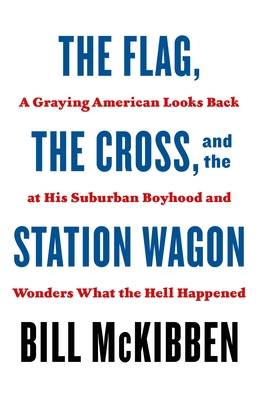
The Flag, the Cross, and the Station Wagon: A Graying American Looks Back at His Suburban Boyhood and Wonders What the Hell Happened
by Bill McKibben
Rating: 4.1 ⭐
One of the New Yorker 's Best Books of 2022Bill McKibben―award-winning author, activist, educator―is fiercely curious.“I’m curious about what went so suddenly sour with American patriotism, American faith, and American prosperity.”Like so many of us, McKibben grew up believing―knowing―that the United States was the greatest country on earth. As a teenager, he cheerfully led American Revolution tours in Lexington, Massachusetts. He sang “Kumbaya” at church. And with the remarkable rise of suburbia, he assumed that all Americans would share in the wealth.But fifty years later, he finds himself in an increasingly doubtful nation strained by bleak racial and economic inequality, on a planet whose future is in peril.And he is What the hell happened?In this revelatory cri de coeur , McKibben digs deep into our history (and his own well-meaning but not all-seeing past) and into the latest scholarship on race and inequality in America, on the rise of the religious right, and on our environmental crisis to explain how we got to this point. He finds that he is not without hope. And he wonders if any of that trinity of his youth― The Flag, the Cross, and the Station Wagon ―could, or should, be reclaimed in the fight for a fairer future.

Bestselling author and environmental activist Bill McKibben recounts the personal and global story of the fight to build and preserve a sustainable planetBill McKibben is not a person you'd expect to find handcuffed and behind bars, but that's where he found himself in the summer of 2011 after leading the largest civil disobedience in thirty years, protesting the Keystone XL pipeline in front of the White House.With the Arctic melting, the Midwest in drought, and Irene scouring the Atlantic, McKibben recognized that action was needed if solutions were to be found. Some of those would come at the local level, where McKibben joins forces with a Vermont beekeeper raising his hives as part of the growing trend toward local food. Other solutions would come from a much larger fight against the fossil-fuel industry as a whole.Oil and Honey is McKibben’s account of these two necessary and mutually reinforcing sides of the global climate fight—from the center of the maelstrom and from the growing hive of small-scale local answers. With empathy and passion he makes the case for a renewed commitment on both levels, telling the story of raising one year’s honey crop and building a social movement that’s still cresting.

Wandering Home: A Long Walk Across America's Most Hopeful Landscape: Vermont's Champlain Valley and New York's Adirondacks
by Bill McKibben
Rating: 3.9 ⭐
The acclaimed author of The End of Nature takes a three-week walk from his current home in Vermont to his former home in the Adirondacks and reflects on the deep hope he finds in the two landscapes.Bill McKibben begins his journey atop Vermont’s Mt. Abraham, with a stunning view to the west that introduces us to the broad Champlain Valley of Vermont, the expanse of Lake Champlain, and behind it the towering wall of the Adirondacks. “In my experience,” McKibben tells us, “the world contains no finer blend of soil and rock and water and forest than that found in this scene laid out before me—a few just as fine, perhaps, but none finer. And no place where the essential human skills—cooperation, husbandry, restraint—offer more possibility for competent and graceful inhabitation, for working out the answers that the planet is posing in this age of ecological pinch and social fray.”The region he traverses offers a fine contrast between diverse forms of human habitation and pure wilderness. On the Vermont side, he visits with old friends who are trying to sustain traditional ways of living on the land and to invent new ones, from wineries to biodiesel. After crossing the lake in a rowboat, he backpacks south for ten days through the vast Adirondack woods. As he walks, he contemplates the questions that he first began to raise in his groundbreaking meditation on climate change, The End of Nature : What constitutes the natural? How much human intervention can a place stand before it loses its essence? What does it mean for a place to be truly wild?Wandering Home is a wise and hopeful book that enables us to better understand these questions and our place in the natural world. It also represents some of the best nature writing McKibben has ever done.

“Highly personal and original . . . McKibben goes beyond Marshall McLuhan’s theory that the medium is the message.”—— The New York TimesImagine watching an entire day’s worth of television on every single channel. Acclaimed environmental writer and culture critic Bill McKibben subjected himself to this sensory overload in an experiment to verify whether we are truly better informed than previous generations. Bombarded with newscasts and fluff pieces, game shows and talk shows, ads and infomercials, televangelist pleas and Brady Bunch episodes, McKibben processed twenty-four hours of programming on all ninety-three Fairfax, Virginia, cable stations. Then, as a counterpoint, he spent a day atop a quiet and remote mountain in the Adirondacks, exploring the unmediated man and making small yet vital discoveries about himself and the world around him. As relevant now as it was when originally written in 1992–and with new material from the author on the impact of the Internet age–this witty and astute book is certain to change the way you look at television and perceive media as a whole.“By turns humorous, wise, and troubling . . . a penetrating critique of technological society.”– Cleveland Plain Dealer“Masterful . . . a unique, bizarre portrait of our life and times.”– Los Angeles Times“Do yourself a Put down the remote and pick up this book.”– Houston Chronicle

The best-selling author of The End of Nature shares his observations on training to become a world-class skier as a man approaching middle age. Reprint.

Too many people have come to dread the approach of the holidays, a season that should--and can--be the most relaxed, intimate, joyful, and spiritual time of the year. In this book, Bill McKibben offers some suggestions on how to rethink Christmastime, so that our current obsession with present buying becomes less important than the dozens of other possible traditions and celebrations. Working through their local churches, McKibben and his colleagues found that people were hungry for a more joyful Christmas season. For many, trying to limit the amount of money they spent at Christmas to about a hundred dollars per family was a real spur to their creativity--and a real anchor against the relentless onslaught of commercials and catalogs that try to say Christmas is only Christmas if it comes from a store. McKibben shows how the store-bought Christmas developed and how out of tune it is with our current lives, when we're really eager for family fellowship, for community involvement, for contact with the natural world, and also for the blessed silence and peace that the season should offer. McKibben shows us how to return to a simpler and more enjoyable holiday.Christmas is too wonderful a celebration to give up on, too precious a time simply to repeat the same empty gestures from year to year. This book will serve as a road map to a Christmas far more joyful than the ones you've known in the past.

Here Comes the Sun: A Last Chance for the Climate and a Fresh Chance for Civilization
by Bill McKibben
Rating: 4.5 ⭐
From the acclaimed environmentalist, a call to harness the power of the sun and rewrite our scientific, economic, and political future.Our climate, and our democracy, are melting down. But Bill McKibben, one of the first to sound the alarm about the climate crisis, insists the moment is also full of possibility. Energy from the sun and wind is suddenly the cheapest power on the planet and growing faster than any energy source in history—if we can keep accelerating the pace, we have a chance.Here Comes the Sun tells the story of the sudden spike in power from the sun and wind—and the desperate fight of the fossil fuel industry and their politicians to hold this new power at bay. From the everyday citizens who installed solar panels equal to a third of Pakistan’s electric grid in a year to the world’s sixth-largest economy—California—nearly halving its use of natural gas in the last two years, Bill McKibben traces the arrival of plentiful, inexpensive solar energy. And he shows how solar power is more than just a path out of the climate crisis: it is a chance to reorder the world on saner and more humane grounds. You can’t hoard solar energy or hold it in reserves—it’s available to all.There’s no guarantee we can make this change in time, but there is a hope—in McKibben’s eyes, our best hope for a new civilization: one that looks up to the sun, every day, as the star that fuels our world.

"Passionate, succinct, chilling, closely argued, sometimes hilarious, touchingly well-intentioned, and essential." ―Margaret Atwood, The New York Review of BooksNearly fifteen years ago, in The End of Nature , Bill McKibben demonstrated that humanity had begun to irrevocably alter and endanger our environment on a global scale. Now he turns his eye to an array of technologies that could change our relationship not with the rest of nature but with ourselves. He explores the frontiers of genetic engineering, robotics, and nanotechnology―all of which we are approaching with astonishing speed―and shows that each threatens to take us past a point of no return. We now stand, in Michael Pollan's words, "on a moral and existential threshold," poised between the human past and a post-human future. McKibben offers a celebration of what it means to be human, and a warning that we risk the loss of all meaning if we step across the threshold. Instantly acclaimed for its passion and insight, this wise and eloquent book argues that we cannot forever grow in reach and power―that we must at last learn how to say, "Enough."

Bill McKibben’s first book, the bestselling The End of Nature , offered a devastating portrait of the harm human civilization has done to the planet. Hope, Human and Wild sets out on a dramatically different journey to provide examples and hope for a sustainable future, one in which our society’s wealth is measured less by its material productivity and more by its spiritual richness; less by its consumption of resources and more by the extent to which we live in harmony with the natural world. From the Adirondack Mountains to Kerala, India, to Curitiba, Brazil, McKibben offers clear-eyed and profoundly compelling portraits of places where resourceful people have confronted modern problems with inventive solutions, and thrived in the process. With an afterword by the author updating developments over the decade since the book was first published, this edition provides a badly needed vision of optimism for the future of our planet.
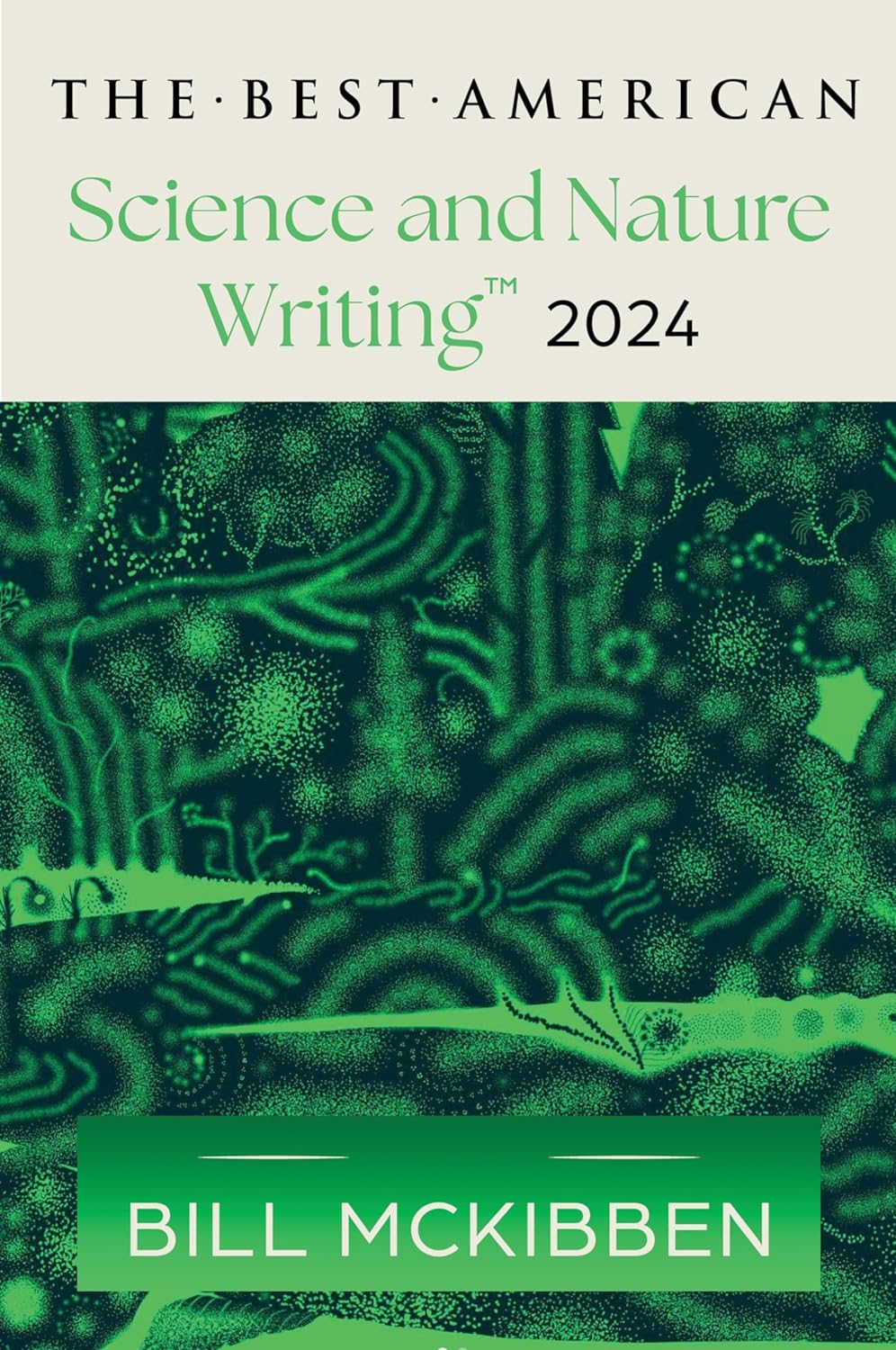
Award-winning environmentalist, author, and journalist Bill McKibben selects twenty science and nature essays that represent the best examples of the form published in the previous year.A collection of the best science and nature articles published in 2023, selected by guest editor Bill McKibben and series editor Jaime Green.

In light of climate change warnings, more families are looking for ways to reduce their carbon footprint and help prevent disasters like rising sea levels, wildfires, and increasing global temperatures. In this compelling book, the author of The End of Nature and Falter argues for a solution with sociological, population, and environmental having fewer children.The earth is becoming dangerously overcrowded, and if more families chose to have only one child, it would make a crucial difference toward ensuring a healthy future for ourselves and our planet for generations to come.But the environment alone may not persuade most people to consider having just one child, as 80% of Americans have siblings. Powerful stereotypes about only children—that they’re spoiled, selfish, or maladjusted in some way—still persist. McKibben, the proud father of an only child himself, debunks these myths, citing research about the many emotional and intellectual strengths only children possess, including higher test scores, higher levels of achievement in school, and greater development of positive personality traits like maturity and self-control.At once a powerful personal argument and an accessible exploration of what overpopulation could mean to human life and environmental sustainability, Maybe One is a provocative yet well-reasoned opening to what has become important and lasting debate.

Powerful, impassioned essays on living and being in the world, from the bestselling author of The End of Nature and Deep EconomyFor a generation, Bill McKibben has been among America's most impassioned and beloved writers on our relationship to our world and our environment. His groundbreaking book on climate change, The End of Nature , is considered "as important as Rachel Carson's classic Silent Spring "* and Deep Economy, his "deeply thoughtful and mind-expanding"** exploration of globalization, helped awaken and fuel a movement to restore local economies.Now, for the first time, the best of McKibben's essays―fiery, magical, and infused with his uniquely soulful investigations of modern life―are collected in a single volume, The Bill McKibben Reader. Whether meditating on today's golden age in radio, the natural place of biting black flies in our lives, or the patriotism of a grandmother fighting to get corporate money out of politics, McKibben inspires us to become better caretakers of the Earth―and of one another.* The Plain Dealer (Cleveland )**Michael Pollan
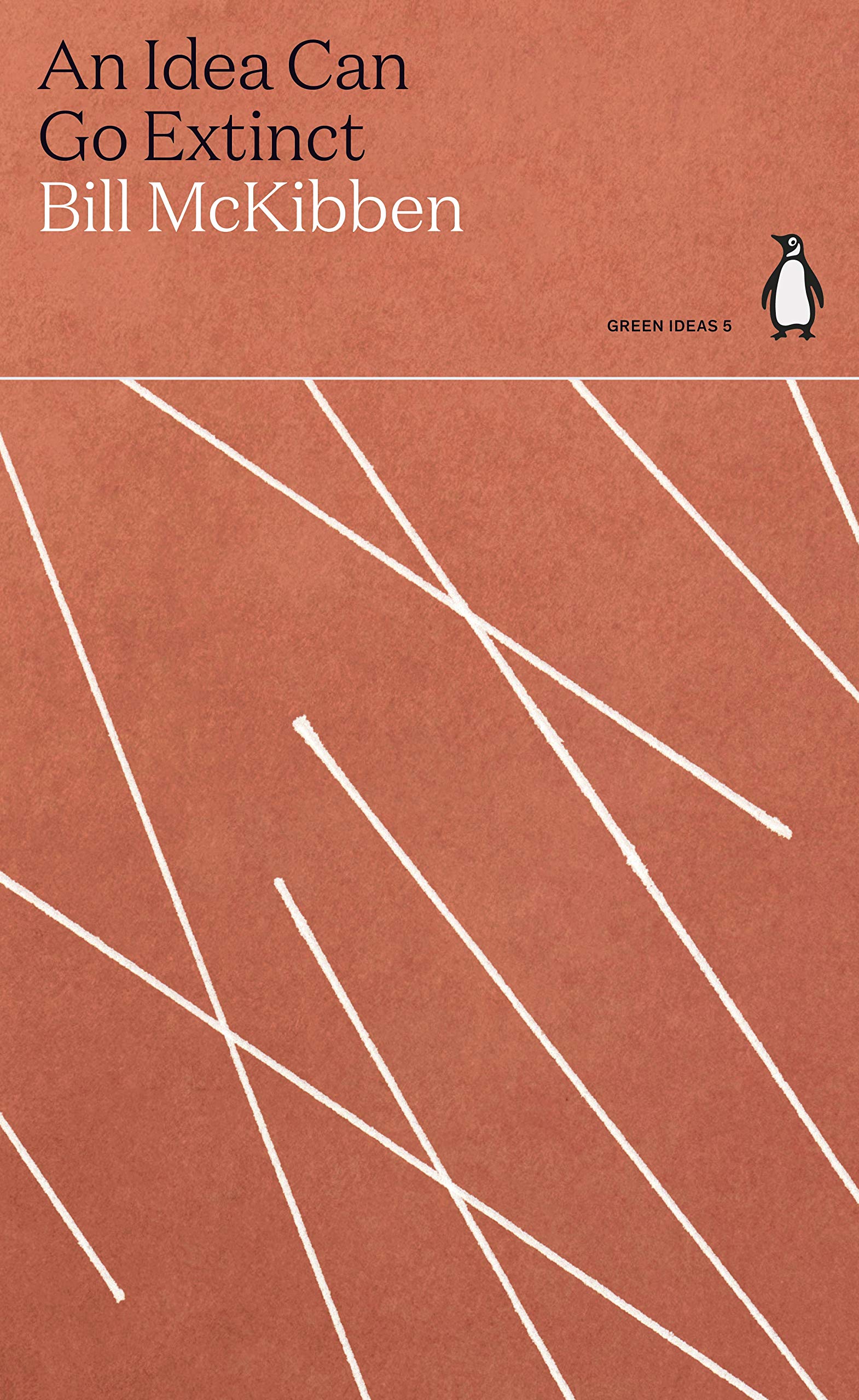
In twenty short books, Penguin brings you the classics of the environmental movement.An Idea Can Go Extinct is Bill McKibben's impassioned, groundbreaking account of how, by changing the earth's entire atmosphere, the weather and the most basic forces around us, 'we are ending nature.'Over the past 75 years, a new canon has emerged. As life on Earth has become irrevocably altered by humans, visionary thinkers around the world have raised their voices to defend the planet, and affirm our place at the heart of its restoration. Their words have endured through the decades, becoming the classics of a movement. Together, these books show the richness of environmental thought, and point the way to a fairer, saner, greener world.

From environmentalist and bestselling author Bill McKibben comes a hopeful, inspiring picture book celebrating the power of human cooperation and the beauty of life on Earth, beautifully illustrated by artist Stevie Lewis. When we work together, we humans can do incredible things. We share the responsibility to address climate change and our changing planet. It is critical that we act collectively to protect our beautiful, fragile world. Renowned environmentalist Bill McKibben and the incredibly talented artist Stevie Lewis team up to bring this gorgeous picture book to life. Celebrating the amazing things people can do, it’s an inspiring message of hope.

This is a book for all of students, activists, Earthlings. Edited by perhaps the most widely-respected writer on the environment today, GWR is a comprehensive resource that collects seminal texts and voices on climate change from the phenomenon’s discovery in the late 19th century to the present. What is happening to our planet—and what can we do about it? This collection, which includes criticism of the very concept of global warming (by doubters U.S. Sen. James Inhofe and Michael Crichton), attempts to answer these all-important questions.Divided into three parts—Science, Politics, and Meaning—the book contains a transcript of NASA scientist James Hansen's testimony before the U.S. Congress; George Monbiot's biting, convincing indictment of who is really using up the planet's resources; Elizabeth Kolbert's groundbreaking essay “The Darkening Sea,” and excerpts from the work of Al Gore, Naomi Klein, and many others. Even in this age of electronic archives, GWR is essential, as much for Bill McKibben's selection and introductions as it is for its broad spectrum of content.Including original introductory paragraphs to each selection by the editor.

In The Comforting Whirlwind , acclaimed environmentalist and writer Bill McKibben turns to the biblical book of Job and its awesome depiction of creation to demonstrate our need to embrace a bold new paradigm for living if we hope to reverse the current trend of ecological destruction.With reference to the consequences of our poorly considered and self-centered environmental practices―global warming, ozone degradation, deforestation―McKibben combines modern science and timeless biblical wisdom to make the case that growth and economic progress are not only undesirable but deadly. If we continue to accelerate the pace of development, we will inevitably complete the “decreation” of our planet and everything on it, including ourselves.In his signature lyrical prose, and using Stephen Mitchell's powerful translation of Job, McKibben calls readers to truly appreciate both the majesty of creation and humanity's rightful―and responsible―place in it.

Fight Global Warming Now: The Handbook for Taking Action in Your Community
by Bill McKibben
Rating: 3.6 ⭐
Bestselling author Bill McKibben turns activist in the first hands-on guidebook to stopping climate change, the world's greatest threatHurricane Katrina. A rapidly disappearing Arctic. The warmest winter on the East Coast in recorded history. The leading scientist at NASA warns that we have only ten years to reverse climate change; the British government's report on global warming estimates that the financial impact will be greater than the Great Depression and both world wars―combined. Bill McKibben, the author of the first major book on global warming, The End of Nature , warns that it's no longer time to debate global warming, it's time to fight it.Drawing on the experience of Step It Up, a national day of rallies held on April 14, McKibben and the Step It Up team of organizers provide the facts of what must change to save the climate and show how to build the fight in your community, church, or college. They describe how to launch online grassroots campaigns, generate persuasive political pressure, plan high-profile events that will draw media attention, and other effective actions. Fight Global Warming Now offers an essential blueprint for a mighty new movement against the most urgent challenge facing us today.

I AM COYOTE: Readings for the Wild is an anthology of the great wilderness writings. The collection contains works written by mountaineers, paddlers, and backcountry travelers; poets, novelists, and environmental advocates. In these writings, we see nature's admirers thirsting for adventure and truth on land, river, sea, and ice. I AM COYOTE includes writings from Muir, Kerouac, Emerson, Roosevelt, Whitman, Twain, Shackleton, Berry and many more. A portion of the proceeds go towards the scholarship fund for the National Outdoor Leadership School (NOLS)

Im Jahr 1989 warnte Bill McKibben mit seinem Buch »Das Ende der Natur« als einer der ersten vor dem Klimawandel. Sein neuer Aufruf ist umso dringender und weitreichender – die Menschheit ist dabei, nicht weniger als ihr Fortbestehen aufs Spiel zu setzen. Der Klimawandel ist heute, so McKibben, ein Hebel, der unsere Welt von Grund auf verändert. Die konzentrierte wirtschaftliche Macht in den Händen einiger weniger Spieler ist ein weiterer. Genauso die radikalen Konsequenzen der modernen Genetik sowie das Streben der Tech-Mogule nach künstlicher Intelligenz, das nach dem Sinn menschlichen Daseins gar nicht mehr fragt. In »Die taumelnde Welt« tritt Bill McKibben einen großen Schritt zurück, um dieses gesamte »Spiel der Menschheit« zu betrachten: Welchen Lauf nimmt es, wer macht die Regeln, und wie wollen wir es in Zukunft spielen?

This issue of Plough Quarterly explores our relationship with the natural world. Hear from leading scientists, farmers, writers, activists, theologians, and artists who have set their hearts and minds and hands to caring for the earth for generations to come.Bold, hope-filled, and down-to-earth, Plough Quarterly features thought-provoking articles, commentary, interviews, short fiction, book reviews, poetry and artwork to inspire everyday faith and action. Each issue brings together essential voices from many traditions to give you fresh insights on a core theme such as peacemaking, biblical justice, children and family, building community, man and woman, nature and the environment, nonviolence, or simple living. Starting from the conviction that the teachings and example of Jesus can transform and renew our world, it aims to apply them to all aspects of life, seeking common ground with all people of goodwill regardless of creed.

Climate change is causing larger and more frequent weather disasters.Floods are the most frequent and costly in the United States, causing $17 billion annually in damages between 2010 and 2018—and experts predict damages will double by 2051. How should we respond?Climate change expert Bill Becker argues we should not respond by building more flood-control structures like dams, levees, and seawalls. That was the policy of the last century. The nation's 92,000 dams and 30,000 miles of levees are aging and insufficient to stop the floods we see today. More than 100 million Americans are now at risk.The Creeks Will People Coexisting with Floods makes a compelling case that we must begin collaborating with nature. Wherever possible, communities should help flood-prone families move to safer places. We should return the land to rivers and oceans and restore the wetlands, coastal marshes, and other ecosystems that provide natural flood protection.Becker writes from experience. He helped move a flood-prone community to higher ground forty years ago. He has since worked with scores of flooded communities to help them plan their recoveries.We must collaborate with nature rather than trying to control it.

Hamish Fulton (b. 1946) first came to prominence in the late 1960s as part of a distinguished generation of young British artists who were engaged with extending the possibilities of sculpture. Known as a sculptor, photographer, conceptual artist, and land artist, Fulton prefers to characterize himself as a "walking artist." His walks have taken him to locations as varied as Japan, the Himalayas, Italy, India, Iceland, and the deserts of Montana, as well as throughout England. This volume, published to accompany an exhibition at Tate Britain in Spring 2002 of new and recent work by Fulton, is lavishly illustrated with an 80-page section of new photographic and text work made by Fulton especially for the book. It also includes an essay by Andrew Wilson tracing the artist1s career and influences, an in-depth interview with the artist by the exhibition curator, Ben Tufnell, and contributions by the environmentalist Bill McKibben and mountaineer Doug Scott, whose texts explore issues central to Fulton1s art.