
Bethany McLean
Bethany McLean is a contributing editor to Vanity Fair magazine, and known for her work on the Enron scandal. She had been an editor at large and columnist for Fortune magazine. McLean grew up in Hibbing and received her BA in English and mathematics at Williams College in 1992. After college and prior to joining Fortune, she worked as an investment banker for Goldman Sachs.
8 Books Written

Smartest Guys in the Room: The Amazing Rise and Scandalous Fall of Enron
by Bethany McLean
Rating: 4.2 ⭐
• 2 recommendations ❤️
An account of the rise and fall of Enron, written by award-winning Fortune investigative reporters, draws on a wide range of sources while revealing the contributions of lesser-known participants in the scandal. 400,000 first printing. First serial, Fortune.
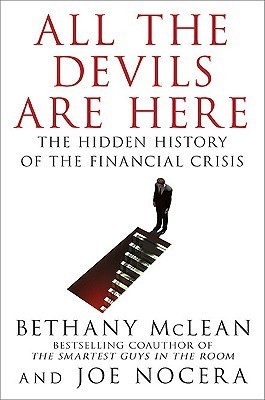
"Hell is empty, and all the devils are here." -Shakespeare, The TempestAs soon as the financial crisis erupted, the finger-pointing began. Should the blame fall on Wall Street, Main Street, or Pennsylvania Avenue? On greedy traders, misguided regulators, sleazy subprime companies, cowardly legislators, or clueless home buyers?According to Bethany McLean and Joe Nocera, two of America's most acclaimed business journalists, the real answer is all of the above-and more. Many devils helped bring hell to the economy. And the full story, in all of its complexity and detail, is like the legend of the blind men and the elephant. Almost everyone has missed the big picture. Almost no one has put all the pieces together.All the Devils Are Here goes back several decades to weave the hidden history of the financial crisis in a way no previous book has done. It explores the motivations of everyone from famous CEOs, cabinet secretaries, and politicians to anonymous lenders, borrowers, analysts, and Wall Street traders. It delves into the powerful American mythology of homeownership. And it proves that the crisis ultimately wasn't about finance at all; it was about human nature.Among the devils you'll meet in vivid detail:• Angelo Mozilo, the CEO of Countrywide, who dreamed of spreading homeownership to the masses, only to succumb to the peer pressure-and the outsized profits-of the sleaziest subprime lending.• Roland Arnall, a respected philanthropist and diplomat, who made his fortune building Ameriquest, a subprime lending empire that relied on blatantly deceptive lending practices.• Hank Greenberg, who built AIG into a Rube Goldberg contraption with an undeserved triple-A rating, and who ran it so tightly that he was the only one who knew where all the bodies were buried.• Stan O'Neal of Merrill Lynch, aloof and suspicious, who suffered from "Goldman envy" and drove a proud old firm into the ground by promoting cronies and pushing out his smartest lieutenants.• Lloyd Blankfein, who helped turn Goldman Sachs from a culture that famously put clients first to one that made clients secondary to its own bottom line.• Franklin Raines of Fannie Mae, who (like his predecessors) bullied regulators into submission and let his firm drift away from its original, noble mission.• Brian Clarkson of Moody's, who aggressively pushed to increase his rating agency's market share and stock price, at the cost of its integrity.• Alan Greenspan, the legendary maestro of the Federal Reserve, who ignored the evidence of a growing housing bubble and turned a blind eye to the lending practices that ultimately brought down Wall Street-and inflicted enormous pain on the country.Just as McLean's The Smartest Guys in the Room was hailed as the best Enron book on a crowded shelf, so will All the Devils Are Here be remembered for finally making sense of the meltdown and its consequences.

The Big Fail: How Our Supply Chains Collapsed When We Needed Them Most
by Bethany McLean
Rating: 4.1 ⭐
From the author of the modern business classic The Smartest Guys in the Room comes a damning indictment of late-stage capitalism-and the leaders that were brutally unprepared for a global pandemic.In 2020, the coronavirus pandemic made it painfully clear that governments across the world could not adequately protect their citizens. Millions of people suffered and died in just two years, while administrations around the globe blundered; prize-winning economists overlooked devastating trade-offs from the collapse of trade; and elites escaped to isolated retreats, unaffected by - and worse, even profiting from - the worst healthcare crisis to hit humanity in decades.In this page-turning economic, political and financial history, veteran journalists Bethany McClean and Joseph Nocera analyse the American response to the pandemic as a case study, to offer fresh and provocative answers. With laser-sharp reporting and deep sourcing, they investigate what really happened when governments ran out of PPE due to snarled supply chains; and the shock to the financial system when the world's biggest economies stumbled. They zero in on the effectiveness of wildly polarised approaches across states, and they trace why thousands died in hollowed-out hospital systems and nursing homes run by private equity firms, all in the name of "maximising shareholder value".The Big Fail is an expansive, gripping narrative account on what the pandemic did to one economy, and how it forced us to question the fundamental principles of our society

Saudi America: The Truth About Fracking and How It's Changing the World
by Bethany McLean
Rating: 3.8 ⭐
"A sharp portrait of the US shale revolution." -- Financial Times Bestselling author Bethany McLean reveals the true story of fracking's impact -- on Wall Street, the economy and geopolitics.The technology of fracking in shale rock -- particularly in the Permian Basin in Texas -- has transformed America into the world's top producer of both oil and natural gas. The U.S. is expected to be "energy independent" and a "net exporter" in less than a decade, a move that will upend global politics, destabilize Saudi Arabia, crush Russia's chokehold over Europe, and finally bolster American power again.Or will it?Investigative journalist Bethany McLean digs deep into the cycles of boom and bust that have plagued the American oil industry for the past decade, from the financial wizardry and mysterious death of fracking pioneer Aubrey McClendon, to the investors who are questioning the very economics of shale itself. McLean finds that fracking is a business built on attracting ever-more gigantic amounts of capital investment, while promises of huge returns have yet to bear out. Saudi America tells a remarkable story that will persuade you to think about the power of oil in a new way.

Fannie Mae and Freddie Mac were created by Congress to serve the American Dream of homeownership. By the end of the century, they had become extremely profitable and powerful companies, instrumental in putting millions of Americans in their homes.So why does the government now want them dead?In 2008, the U.S. Treasury put Fannie and Freddie into a life-support state known as “conservatorship” to prevent their failure—and worldwide economic chaos. The two companies, which were always controversial, have become a battleground. Today, Fannie and Freddie are profitable again but still in conservatorship. Their profits are being redirected toward reducing the federal deficit, which leaves them with no buffer should they suffer losses again. China and Japan are big owners of Fannie and Freddie securities, and they want to ensure the safety of their investments—which helps explain why the government is at an impasse about what to do. But the current state of limbo is unsustainable.Based on comprehensive reporting and dozens of interviews, Shaky Ground chronicles the story of Fannie and Freddie seven years after the meltdown, and tells us why homeownership finance is now one of the biggest unsolved issues in today’s global economy—and why it must be placed on firmer ground.

The Smartest Guys in the Room: The Amazing Rise and Scandalous Fall of Enron by Elkind, Peter, McLean, Bethany New Edition
by Bethany McLean
Rating: 4.6 ⭐


The Big Fail: How Our Supply Chains Collapsed When We Needed Them Most
by Bethany McLean
Rating: 4.0 ⭐
Brought to you by Penguin.From the author of the modern business classic The Smartest Guys in the Room comes a damning indictment of late-stage capitalism - and the leaders that were brutally unprepared for a global pandemic. In 2020, the coronavirus pandemic made it painfully clear that governments across the world could not adequately protect their citizens. Millions of people suffered and died in just two years, while administrations around the globe blundered; prize-winning economists overlooked devastating trade-offs from the collapse of trade; and elites escaped to isolated retreats, unaffected by - and worse, even profiting from - the worst healthcare crisis to hit humanity in decades. In this compelling economic, political and financial history, veteran journalists Bethany McClean and Joseph Nocera analyse the American response to the pandemic as a case study, to offer fresh and provocative answers. With laser-sharp reporting and deep sourcing, they investigate what really happened when governments ran out of PPE due to snarled supply chains; and the shock to the financial system when the world's biggest economies stumbled. They zero in on the effectiveness of wildly polarised approaches across states, and they trace why thousands died in hollowed-out hospital systems and nursing homes run by private equity firms, all in the name of "maximising shareholder value".The Big Fail is an expansive, gripping narrative account on what the pandemic did to one economy, and how it forced us to question the fundamental principles of our society.