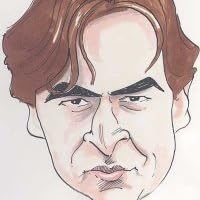
Benjamin Woolley
17 Books Written

Virtual Worlds: A Journey in Hype and Hyperreality
by Benjamin Woolley
Rating: 3.5 ⭐
• 2 recommendations ❤️
Computers have changed our lives; with virtual reality, they will change our very experience, recreating it in an image of our choosing. That, at least, is what the champions of virtual reality claim. It will not simply reshape our view of technology, they say, but our view of ourselves and the world we live in. It is about the increasing power of information technology to create simulated environments, new universes that are neither actual nor fictional, but somewhere in virtual.In Virtual Worlds, Benjamin Woolley examines the reality of virtual reality. He looks at the dramatic intellectual and cultural upheavals that gave birth to it, at the hype that surrounds it, at the people who have promoted it, and at the dramatic implications of its development. Virtual reality is not simply a technology, it is a way of thinking created and promoted by a group of technologists and thinkers that sees itself as creating our future. Virtual Worlds reveals the politics and culture of these virtual realists, and examines whether they are creating reality, or losing their grasp of it.

The Queen's Conjurer: The Science and Magic of Dr. John Dee, Advisor to Queen Elizabeth I
by Benjamin Woolley
Rating: 3.8 ⭐
A fascinating portrait of one of the most brilliant, complex, and colorful figures of the Renaissance.Although his accomplishments were substantial -- he became a trusted confidante to Queen Elizabeth I, inspired the formation of the British Empire, and plotted voyages to the New World-John Dee's story has been largely lost to history. Beyond the political sphere his intellectual pursuits ranged from the scientific to the occult. His mathematics anticipated Isaac Newton by nearly a century, while his mapmaking and navigation were critical to exploration. He was also obsessed with alchemy, astrology, and mysticism. His library was one of the finest in Europe, a vast compendium of thousands of volumes. Yet, despite his powerful position and prodigious intellect, Dee died in poverty and obscurity, reviled and pitied as a madman.Benjamin Woolley tells the engrossing story of the rise and fall of this remarkable man, who wielded great influence during the pivotal era when the age of superstition collided with the new world of science and reason. Written with flair and vigor, based on numerous surviving diaries of the period, The Queen's Conjurer is a highly readable account of an extraordinary life.
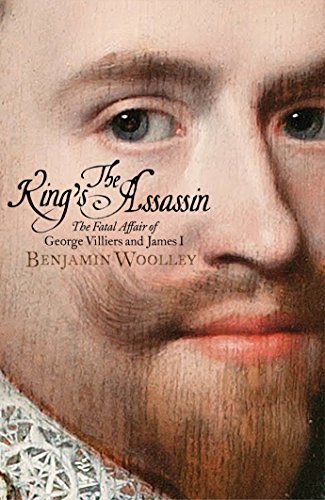
The King's Assassin: The Fatal Affair of George Villiers and James I
by Benjamin Woolley
Rating: 3.6 ⭐
Now a major TV series, Mary & George, starring Julianne Moore and Nicholas Galitzine.The King’s Assassin is the scandalous story of George Villiers, lover – and murderer – of King James I.The rise of George Villiers from minor gentry to royal power seemed to defy gravity. Becoming gentleman of the royal bedchamber in 1615, the young gallant enraptured James, Britain’s first Stuart king, royal adoration reaching such an intensity that the king declared he wanted the courtier to become his ‘wife’. For a decade, Villiers was at the king’s side – at court, on state occasions and in bed, right up to James’s death in March 1625.Almost immediately, Villiers’ many enemies accused him of poisoning the king. A parliamentary investigation was launched, but the charges came to nothing, and were relegated to a historical footnote.Now, new historical scholarship suggests that a deadly combination of hubris and vulnerability did indeed drive Villiers to kill the man who made him. It may have been by accident, but there is compelling evidence that Villiers, overcome by ambition and frustrated by James’s passive approach to government, poisoned him.In The King’s Assassin, acclaimed author Benjamin Wooley examines this remarkable, even tragic story. Combining vivid characterization and a strong narrative with historical scholarship and forensic investigation, Woolley tells the story of King James’s death, and of the captivating figure at its centre. What emerges is a compelling portrait of a royal favourite whose charisma overwhelmed those around him and, ultimately, himself.

Savage Kingdom: The True Story of Jamestown, 1607, and the Settlement of America
by Benjamin Woolley
Rating: 3.6 ⭐
“Brilliantly framed . . . fascinating . . . a well-told story of discovery, conquest, business, and politics.” — Kirkus Reviews Four centuries ago, and 14 years before the Mayflower, a group of men—led by a one-armed ex-pirate, an epileptic aristocrat, a reprobate cleric and a government spy—left London aboard a fleet of three ships. Despite their shortcomings, and against the odds, they built Jamestown, a ramshackle outpost that laid the foundations of the British Empire and the United States of America. Drawing on new discoveries, neglected sources, and manuscript collections scattered across the world, Savage Kingdom challenges the textbook image of Jamestown as a mere money-making venture. It reveals a reckless, daring enterprise led by outcasts of the Old World who found themselves interlopers in a new one. An intimate story in an epic setting, it shows how the land of Pocahontas came to be drawn into a new global order.

The Barnes & Noble Review:An almost perfect embodiment of the union of opposites -- in this case science and poetry -- Ada Byron, daughter of Lord Byron, is best remembered among the cognoscenti for her namesake, the Department of Defense's computer language "Ada." This legacy is the result of her writings on Charles Babbage's plans for an "Analytical Engine," now recognized as the precursor to modern computers.In The Bride of Science Benjamin Woolley links Ada's personal struggles to the larger context of historical change, creating a fascinating lens through which to view the incredible social disruption during the early years of the industrial revolution and the ambivalence these changes wrought. Ada's life spanned the years 1815 to 1852, during which the newly introduced rail lines and telegraph access made the power of technology a reality in people's lives. The Romantic movement was the backlash against those who would attempt to apply "scientific" thinking to every aspect of the human experience. As one of the Romantic movement's greatest prophets, Lord Byron's excessive indulgence of various illicit desires (one being particularly dangerous) led him to marry a woman who deluded herself into believing she could save him. Ada's mother, Annabella, was the dominant force in her life -- a self-righteous and self-serving woman who embraced the new virtues of rationality.The marriage lasted barely long enough for Annabella to become pregnant, and she spent the rest of her life justifying the infamous separation from her celebrity husband. Annabella barred Byron from any contact with his daughter and put Ada on a strict regimen of moral and mathematical study to suppress any Byronic tendencies Ada may have inherited. To the public eye, Ada was a curiosity. Put upon in an entirely modern way, Ada was famous from the day she was born. Although Ada took up science with enthusiasm, her Byronic eccentricities and passions were not extinguished by logic. Like her father, Ada looked to marriage to save her, but her husband, the future Earl of Lovelace, was not able to control her in the end. As an adult, Ada set out to find her mission, which she hoped would combine her two halves, and prove that the product of science and poetry would produce genius, not a monstrosity. Her work with Babbage was one attempt at a "poetical science" requiring imagination and rigor. She also indulged in many of the other popular ideas of the day, such as phrenology and mesmerism, with a more discerning eye than most. At the end of her life, she turned to the new work being done with that mysterious force, electricity, in the hopes of finding a molecular basis in the human nervous system to explain emotions. She was plagued by this time with both physical and mental disorders, and so also hoped to find some personal salvation in this quest. But her Byronic nature was getting stronger in the form of an affair and gambling addiction (there is an interesting speculation that she tried to develop a mathematical formula to beat the odds), and she finally succumbed to illness. In the end she requested to be buried next to the father she never knew in life. The Bride of Science is a wonderful portrait of the struggle between reason and passion. --Laura Wood, Science & Nature Editor

This is a story of Nicholas Culpeper - legendary rebel, radical, Puritan and author of the great 'Herbal'. This history of medicine's first freedom fighter is set in London during Britain's age of revolution.


Virtual Worlds a Journey in Hype and Hypeerreality
by Benjamin Woolley

The King's Assassin
by Benjamin Woolley
Heal Thyself Nicholas Culpeper Sevemteenth Century Struggle to Bring Medicine to People.
by Benjamin Woolley
Heal Thyself
by Benjamin Woolley
"A textbook of natural living" with the autobiography of the author and a scientific approach to exercising and eating for a healthy life. Recipes by Caroline Hills Inches. 33 pages; 24 pages of b&w photos; 6.5 x 9.5 inches.
Micro Enquirer: Atari
by Benjamin Woolley
Micro Enquirer: Commodore 64
by Benjamin Woolley
Micro Enquirer: B.B.C.Micro
by Benjamin Woolley