
B. Alan Wallace
27 Books Written

Dreaming Yourself Awake: Lucid Dreaming and Tibetan Dream Yoga for Insight and Transformation
by B. Alan Wallace
Rating: 3.9 ⭐
• 2 recommendations ❤️
An “accessible look at the ways we can access the hidden adventures within our dreams and stretch our imaginations into the realm of enlightenment” through lucid dreaming and dream yoga ( San Francisco Book Review )Some of the greatest of life’s adventures can happen while you’re sound asleep. That’s the promise of lucid dreaming, which is the ability to alter your own dream reality any way you like simply by being aware of the fact that you’re dreaming while you’re in the midst of a dream. There is a range of techniques anyone can learn to become a lucid dreamer—and this book provides all the instruction you need to get started.But B. Alan Wallace also shows how to take the experience of lucid dreaming beyond entertainment to use it to heighten creativity, to solve problems, and to increase self-knowledge. He then goes a step further: moving on to the methods of Tibetan Buddhist dream yoga for using your lucid dreams to attain the profoundest kind of insight.

Shamatha meditation is a method for achieving previously inconceivable levels of concentration. Author B. Alan Wallace, an active participant in the much-publicized dialogues between Buddhists and scholars, has more than 20 years' practice in the discipline, some of it under the guidance of the Dalai Lama. This book is a definitive presentation of his knowledge of shamatha. It is aimed at the contemporary seeker who is distracted and defocused by the dizzying pace of modern life, as well as those suffering from depression and other mental maladies. Beginning by addressing the inherent problems that follow from an inability to focus, Wallace moves on to explore varying levels of meditation. The result is an interior travelogue that recounts an exciting, rewarding "expedition of the mind," tracing everything from the confusions at the bottom of the trail to the extraordinary clarity and power that come with making it to the top.

All of us have attitudes. Some of them accord with reality and serve us well throughout the course of our lives. Others are out of alignment with reality and cause us problems. Tibetan Buddhist practice isn't just sitting in silent meditation, it's developing fresh attitudes that align our minds with reality. Attitudes need adjusting, just like a spinal column that has been knocked out of alignment. In this book, B. Alan Wallace explains a fundamental type of Buddhist mental training which is designed to shift our attitudes so that our minds become pure wellsprings of joy instead of murky pools of problems, anxieties, fleeting pleasures, hopes, and frustrations. Wallace shows us the way to develop attitudes that unveil our full capacity for spiritual awakening.The author draws on his thirty-year training in Buddhism, physics, the cognitive sciences, and comparative religion to challenge readers to reappraise many of their assumptions about the nature of the mind and physical world. By explicitly addressing many practical and theoretical issues that uniquely face us in the modern world, Wallace brings this centuries-old practice into the twenty-first century.

This book is a rich suite of practices that open the heart, counter the distortions in our relationships to ourselves, and deepen our relationship to others.

Discover your personal path to bliss ""This book will give anyone interested in the spectrum of core meditative practices stemming from the Buddhist tradition but in essence universal the deepest of perspectives on what is possible for us as human beings as well as excellent guidance in the essential, time-tested attitudes and practices for actualizing our innate capacity for wisdom, compassion, and well-being, right here and right now.""— Jon Kabat-Zinn , author of Coming to Our Senses and Full Catastrophe Living ""In Genuine Happiness , Alan Wallace displays his rare talent in boiling down the complex to the clear and in guiding readers through a practical path to contentment. A gift for all moods and seasons.""— Daniel Goleman , author of Emotional Why It Can Matter More Than IQ ""This lucid and rich book offers brillant, wise, and accessible teachings on the essentials of four core meditation techniques that lead one to genuine joy and happiness. Alan Wallace's years of practice and teaching shine through every page, as with ease and great humanity, he brings to the reader the possibility of liberation.""— Joan Halifax Roshi , abbot of Upaya Zen Center "" Genuine Happiness is a treasure chest of clear, inspiring teaching jewels. It is an excellent support for any student of meditation.""— Sharon Salzberg , author of Trusting Your Own Deepest Experience In today's overstimulated world, many are realizing that happiness gained through material wealth and frivolous conquests is short-lived. To achieve long-term happiness, you must access your own bountiful resources—housed in your heart and mind. In Genuine Happiness , longtime Buddhist practitioner Alan Wallace shows you the path to bliss. Drawing on more than three decades of study under His Holiness the Dalai Lama and sixty other teachers, as well as 2,500 years of Buddhist tradition, Alan Wallace guides you step by step through five simple yet powerful meditations to help you focus your mind and open your heart to true happiness. Featuring a Foreword by the Dalai Lama, this book will help you discover that it is possible to experience genuine happiness every day. As you incorporate the meditations from Genuine Happiness into your life, you will discover that the joy you've sought has always been only a few meditative minutes away.

Stilling the Mind: Shamatha Teachings from Dudjom Lingpa's Vajra Essence
by B. Alan Wallace
Rating: 4.5 ⭐
In his previous book, The Attention Revolution , bestselling author Alan Wallace guided readers through the stages of shamatha, a meditation for focusing the mind. In Stilling the Mind , he uses the wisdom of Dzogchen--the highest of all the meditation traditions--to open up the shamatha practice into a space of vast freedom. Here, Wallace introduces us to Dudjom Lingpa's Vajra Essence , one of the most cherished works of the Nyingma school from which Dzogchen stems. With his trademark enthusiasm and keen intelligence, Wallace makes obscure concepts intelligible to contemporary readers and allows us to glimpse the profound realizations of a great nineteenth-century spiritual adept.

Tibetan Buddhism from the Ground Up: A Practical Approach for Modern Life
by B. Alan Wallace
Rating: 3.9 ⭐
As long as our minds are dominated by the conditions of the external world, we are bound to remain in a state of dissatisfaction, always vulnerable to grief and fear. How then can we develop an inner sense of well-being and redefine our relationship to a world that seems unavoidably painful and unkind?Many have found a practical answer to that question in the teachings of Tibetan Buddhism. Here at last is an organized overview of these teachings, beginning with the basic themes of the sutras--the general discourses of the Buddha--and continuing through the esoteric concepts and advanced practices of Tantra. Unlike other introductions to Tibetan Buddhism, this accessible, enjoyable work doesn't stop with theory and history, but relates timeless spiritual principles to the pressing issues of modern life, both in terms of our daily experience and our uniquely Western world view.This fascinating, highly readable book asks neither unquestioning faith nor blind obedience to abstract concepts or religious beliefs. Rather, it challenges us to question and investigate life's issues for ourselves in the light of an ancient and effective approach to the sufferings and joys of the human condition.
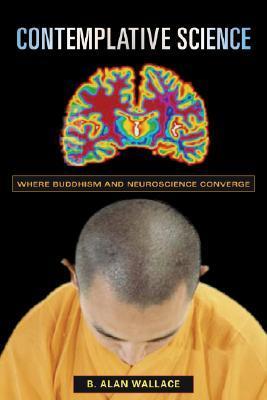
Science has long treated religion as a set of personal beliefs that have little to do with a rational understanding of the mind and the universe. However, B. Alan Wallace, a respected Buddhist scholar, proposes that the contemplative methodologies of Buddhism and of Western science are capable of being integrated into a single discipline: contemplative science.The science of consciousness introduces first-person methods of investigating the mind through Buddhist contemplative techniques, such as samatha, an organized, detailed system of training the attention. Just as scientists make observations and conduct experiments with the aid of technology, contemplatives have long tested their own theories with the help of highly developed meditative skills of observation and experimentation. Contemplative science allows for a deeper knowledge of mental phenomena, including a wide range of states of consciousness, and its emphasis on strict mental discipline counteracts the effects of conative (intention and desire), attentional, cognitive, and affective imbalances.Just as behaviorism, psychology, and neuroscience have all shed light on the cognitive processes that enable us to survive and flourish, contemplative science offers a groundbreaking perspective for expanding our capacity to realize genuine well-being. It also forges a link between the material world and the realm of the subconscious that transcends the traditional science-based understanding of the self.

Bridging the gap between the world of science and the realm of the spiritual, B. Alan Wallace introduces a natural theory of human consciousness that has its roots in contemporary physics and Buddhism. Wallace's "special theory of ontological relativity" suggests that mental phenomena are conditioned by the brain, but do not emerge from it. Rather, the entire natural world of mind and matter, subjects and objects, arises from a unitary dimension of reality that is more fundamental than these dualities, as proposed by Wolfgang Pauli and Carl Jung.To test his hypothesis, Wallace employs the Buddhist meditative practice of samatha , refining one's attention and metacognition, to create a kind of telescope to examine the space of the mind. Drawing on the work of the physicist John Wheeler, he then proposes a more general theory in which the participatory nature of reality is envisioned as a self-excited circuit. In comparing these ideas to the Buddhist theory known as the Middle Way philosophy, Wallace explores further aspects of his "general theory of ontological relativity," which can be investigated by means of vipasyana , or insight, meditation. Wallace then focuses on the theme of symmetry in reference to quantum cosmology and the "problem of frozen time," relating these issues to the theory and practices of the Great Perfection school of Tibetan Buddhism. He concludes with a discussion of the general theme of complementarity as it relates to science and religion.The theories of relativity and quantum mechanics were major achievements in the physical sciences, and the theory of evolution has had an equally deep impact on the life sciences. However, rigorous scientific methods do not yet exist to observe mental phenomena, and naturalism has its limits for shedding light on the workings of the mind. A pioneer of modern consciousness research, Wallace offers a practical and revolutionary method for exploring the mind that combines the keenest insights of contemporary physicists and philosophers with the time-honored meditative traditions of Buddhism.

Mind in the Balance: Meditation in Science, Buddhism, and Christianity
by B. Alan Wallace
Rating: 3.9 ⭐
By establishing a dialogue in which the meditative practices of Buddhism and Christianity speak to the theories of modern philosophy and science, B. Alan Wallace reveals the theoretical similarities underlying these disparate disciplines and their unified approach to making sense of the objective world.Wallace begins by exploring the relationship between Christian and Buddhist meditative practices. He outlines a sequence of meditations the reader can undertake, showing that, though Buddhism and Christianity differ in their belief systems, their methods of cognitive inquiry provide similar insight into the nature and origins of consciousness.From this convergence Wallace then connects the approaches of contemporary cognitive science, quantum mechanics, and the philosophy of the mind. He links Buddhist and Christian views to the provocative philosophical theories of Hilary Putnam, Charles Taylor, and Bas van Fraassen, and he seamlessly incorporates the work of such physicists as Anton Zeilinger, John Wheeler, and Stephen Hawking. Combining a concrete analysis of conceptions of consciousness with a guide to cultivating mindfulness and profound contemplative practice, Wallace takes the scientific and intellectual mapping of the mind in exciting new directions.

Shares the podium with The Tao of Physics & The Dancing Wu Li Masters, and wears the gold medal.—John Tigue, Ph.D., Daemen College

What is Mind? For this ancient question we are still seeking answers. B. Alan Wallace and Brian Hodel propose a science of the mind based on the contemplative wisdom of Buddhism, Hinduism, Taoism, Christianity, and Islam.The authors begin by exploring the history of science, showing how science tends to ignore the mind, even while it is understood to be the very instrument through which we comprehend the world of nature. They then propose a contemplative science of mind based on the sophisticated techniques of meditation that have been practiced for thousands of years in the great spiritual traditions. The final section presents meditations that are of universal relevance to scientists and people of all faiths for revealing new dimensions of consciousness and human flourishing.Embracing Mind moves us beyond the dogmatic debates between theists and atheists over Intelligent Design and Neo-Darwinism, and it returns us to the vital core of science and spirituality: deepening our experience of reality as a whole.

The ability to sustain close mindfulness is a learned skill that offers profound benefits in all situations. This book explains the theory and applications of the practice the Buddha called the direct path to enlightenment. These simple but powerful techniques to cultivate mindfulness will allow anyone, regardless of tradition, beliefs, or lack thereof, to achieve genuine happiness and freedom from suffering. By closely minding the body and breath, we relax, grounding ourselves in physical presence. Coming face to face with our feelings, we stabilize our awareness against habitual reactions. Examining mental phenomena nakedly, we sharpen our perceptions without becoming attached. Ultimately, we see all phenomena just as they are, and we approach the ground of enlightenment.Bringing in his experience as a monk, scientist, and contemplative, Alan Wallace offers a rich synthesis of Eastern and Western traditions, along with a comprehensive range of meditation practices interwoven throughout the text. The meditations are systematically presented, beginning with very basic steps, and then gradually built upon to encourage the reader to consider, investigate, contemplate, and meditate on some of the most challenging questions imaginable. Wallace stresses that the process of discovering the answers experientially is essential. The goal of these practices is the radical healing that results when mental obstacles are overcome and the fundamental nature of experience is witnessed. This insight catalyzes an irreversible transformation.

This book takes a bold new look at ways of exploring the nature, origins, and potentials of consciousness within the context of science and religion. Alan Wallace draws careful distinctions between four elements of the scientific science itself, scientific realism, scientific materialism, and scientism. Arguing that the metaphysical doctrine of scientific materialism has taken on the role of ersatz-religion for its adherents, he traces its development from its Greek and Judeo-Christian origins, focusing on the interrelation between the Protestant Reformation and the Scientific Revolution. He looks at scientists' long term resistance to the firsthand study of consciousness and details the ways in which subjectivity has been deemed taboo within the scientific community. In conclusion, Wallace draws on William James's idea for a "science of religion" that would study the nature of religious and, in particular, contemplative experience.In exploring the nature of consciousness, this groundbreaking study will help to bridge the chasm between religious belief and scientific knowledge. It is essential reading for philosophers and historians of science, scholars of religion, and anyone interested in the relationship between science and religion.

The Art of Transforming the Mind: A Meditator's Guide to the Tibetan Practice of Lojong
by B. Alan Wallace
Rating: 4.5 ⭐
Tibetan Buddhist practice isn't just sitting in silent meditation, it's developing fresh attitudes that align our minds with reality. Includes three new translations of Atisha’s source material.In this book, B. Alan Wallace explains a fundamental type of mental training that is designed to shift our attitudes so that our minds become pure wellsprings of joy instead of murky pools of problems, anxieties, fleeting pleasures, hopes, and frustrations. The lojong—or mind-training—teachings have been the subject of profound study, contemplation, and commentary by many great masters. Wallace shows us the way to develop our capacity for spiritual awareness through his relatable and practical commentary on the mind-training slogans.

Meditations of a Buddhist Skeptic: A Manifesto for the Mind Sciences and Contemplative Practice
by B. Alan Wallace
Rating: 3.8 ⭐
Renowned Buddhist philosopher B. Alan Wallace reasserts the power of shamatha and vipashyana, traditional Buddhist meditations, to clarify the mind's role in the natural world. Raising profound questions about human nature, free will, and experience versus dogma, Wallace challenges the claim that consciousness is nothing more than an emergent property of the brain with little relation to universal events. Rather, he maintains that the observer is essential to measuring quantum systems and that mental phenomena (however conceived) influence brain function and behavior.Wallace embarks on a two-part mission: to restore human nature and to transcend it. He begins by explaining the value of skepticism in Buddhism and science and the difficulty of merging their experiential methods of inquiry. Yet Wallace also proves that Buddhist views on human nature and the possibility of free will liberate us from the metaphysical constraints of scientific materialism. He then explores the radical empiricism inspired by William James and applies it to Indian Buddhist philosophy's four schools and the Great Perfection school of Tibetan Buddhism.Since Buddhism begins with the assertion that ignorance lies at the root of all suffering and that the path to freedom is reached through knowledge, Buddhist practice can be viewed as a progression from agnosticism (not knowing) to gnosticism (knowing), acquired through the maintenance of exceptional mental health, mindfulness, and introspection. Wallace discusses these topics in detail, identifying similarities and differences between scientific and Buddhist understanding, and he concludes with an explanation of shamatha and vipashyana and their potential for realizing the full nature, origins, and potential of consciousness.

Balancing the Mind: A Tibetan Buddhist Approach to Refining Attention
by B. Alan Wallace
Rating: 4.5 ⭐
For centuries, Tibetan Buddhist contemplatives have directly explored consciousness through carefully honed and rigorous techniques of meditation. B. Alan Wallace explains the methods and experiences of Tibetan practitioners and compares these with investigations of consciousness by Western scientists and philosophers. Balancing the Mind includes a translation of the classic discussion of methods for developing exceptionally high degrees of attentional stability and clarity by fifteenth-century Tibetan contemplative Tsongkhapa.

Fathoming the Mind: Inquiry and Insight in Dudjom Lingpa's Vajra Essence
by B. Alan Wallace
Rating: 4.5 ⭐
Bestselling author B. Alan Wallace delivers the long-awaited followup to his Stilling the Shamatha Teachings from Dudjom Lingpa’s Vajra Essence (2011).This companion volume stems from an oral commentary Düdjom Lingpa gave to the next section of the Vajra Essence, in which he elucidates the cultivation of contemplative insight, or vipashyana, into the nature of existence as a whole. The revelation appears in the form of a fascinating dialogue within Düdjom Lingpa’s own various aspects of his mind pose questions to his own primordial consciousness, and the pithy and provocative replies tap into the very ground of being. The ensuing dialogue explores every stage of the path to buddhahood in this lifetime, from the very beginning to the unexcelled result of the rainbow body, signifying enlightenment. Everything you need to know to attain buddhahood is complete in this text. As Wallace continued to reflect on Dudjom Lingpa’s writings and their relevance to the modern world, he was inspired to elaborate extensively on his original commentary. The book includes new introductory essays and an afterword, revealing the texts’ contribution to the contemplative revolution triggered by the discoveries of Galileo, Darwin, and Einstein.

Boundless Heart presents a unique interweaving of teachings on the Four Immeasurables and instruction on quiescence, or shamatha, meditation practices.
In the whole of the Tibetan Buddhist tradition, there is no single treatise more deeply revered or widely practiced than A Guide to the Bodhisattva Way of Life. Composed in the eighth century by the Indian Bodhisattva Santideva, it became an instant classic in the curricula of the Buddhist monastic universities of India, and its renown has grown ever since. Santideva presents methods to harmonize one's life with the Bodhisattva ideal and inspires the reader to cultivate the perfections of the generosity, ethics, patience, zeal, meditative concentration, and wisdom.
Study the Great Perfection with the celebrated Lerab Lingpa, who imparted teachings to the Thirteenth Dalai Lama, and discover the common ground of Tibetan Buddhism’s many schools in essays by his disciples.Lerab Lingpa (1856–1926), also known as Tertön Sogyal, was one of the great Dzogchen (Great Perfection) masters of the nineteenth and early-twentieth centuries and a close confidant and guru of the Thirteenth Dalai Lama. This volume contains translations by B. Alan Wallace of two works that are representative of the lineage of this great “treasure revealer,” or tertön .The first work, composed by Lerab Lingpa himself, is The Vital Essence of Primordial Consciousness . It presents pith instructions on all the stages of the Great Perfection, which is the highest form of meditation and practice in the Nyingma school of Tibetan Buddhism. In this practice, the meditator comes to see directly the ultimate nature of consciousness itself. The work guides the reader from the common preliminaries through to the highest practices of the Great Perfection—the direct crossing over and the achievement of the rainbow body.The second work, Selected Essays on Old and New Views of the Secret Mantrayana , is a collection of seven essays by two of Lerab Lingpa’s close disciples, Dharmasara and Jé Tsultrim Zangpo. Dharmasara wrote six of the essays, providing detailed, erudite explanations of the compatibility among the theories and practices of Great Perfection, Mahamudra (a parallel practice tradition found in other schools), and the Madhyamaka view, especially as these are interpreted by the Indian pandita Candrakirti, the Nyingma master Longchen Rabjam, and Tsongkhapa, founder of the Geluk school of Tibetan Buddhism. The one essay by Jé Tsultrim Zangpo (a.k.a. Tulku Tsullo), “An Ornament of the Enlightened View of Samantabhadra,” contextualizes the Great Perfection within the broader framework of Mahayana and Vajrayana Buddhism and then elucidates all the stages of practice of the Great Perfection, unifying the profound path of cutting through and the vast path of the spontaneous actualization of the direct crossing over.This volume will be of great interest for all those interested in the theory and practice of the Great Perfection and the way it relates to the wisdom teachings of Tsongkhapa and others in the new translation schools of Tibetan Buddhism.Edited by Eva Natanya.

This challenging new work examines practical techniques for training the attention. It will be of interest to seasoned contemplatives, to general readers concerned with meditation, to philosophers of mind, and to cognitive scientists. The book includes a translation, with commentary, of Tsongkhapa's classic fifteenth-century discussion of methods for developing exceptionally high degrees of attentional stability and clarity. Such enhancement and refining of the attention is an indispensable prerequisite to rigorous, introspective enquiry into the nature of the mind. Insights gleaned from such enquiry are instrumental in identifying and eliminating the inner sources of anxiety, frustration, and discontent. To place this training in its traditional context, Professor Wallace explains Tsongkhapa's methodology and presents an overview of Tsongkhapa's vision of reality. The Bridge of Quiescence affords a bridge from Eastern meditative practice to Western philosophy, science, and religion. Wallace's discussion draws upon his knowledge of experimental psychology (such as sensory deprivation studies) and relates Tibetan meditation to discussions of consciousness by such Western thinkers as William James, William Christian, and John Searle.

«Учитель и ученик» – краткое обзорное руководство по разным уровням взаимоотношений между духовным наставником и учеником в рамках тибетской традиции буддизма. Доктор Уоллес рассматривает деликатную тему развития доверия и открытости на разных уровнях практики – от светского уровня, который является общим для всех желающих, до уровней практики основополагающей колесницы, колесницы бодхисаттвы и великого совершенства (дзогчен).

Calma meditativa, le quattro applicazioni dell'attenzione, i quattro incommensurabili, lo yoga del sogno, lo sono queste le forme meditative essenziali per conseguire la felicità autentica. La nostra civiltà, sovraccarica di stimoli, ci induce a cercare la felicità all'esterno, in vani tentativi di piegare la natura al nostro volere, di acquisire ricchezze e fama, o di conquistare qualcosa o qualcuno, con l'unico risultato di diventare dipendenti da questo qualcosa o qualcuno. Malgrado tutto sia in continuo mutamento, infatti, ci ostiniamo a fondare la nostra felicità su qualcosa o qualcuno di inaffidabile... il che sfocia regolarmente nella frustrazione. Il cuore dell'insegnamento buddhista, qui proposto in chiave tibetana, consiste invece nel trovare una felicità autentica, duratura, fondata sull'accesso progressivo alle nostre abbondanti risorse interiori, e a uno stato interiore immutabile, gioioso, lucido, compassionevole, equanime, amorevole... Basandosi su più di trent'anni di studio sotto la direzione del Dalai Lama e su una tradizione antica di 2500 anni, l'autore ci indica la via per attingere a queste nostre risorse, essenzializzandola in cinque meditazioni assolutamente universali, presentate in modo che chiunque possa fruirne direttamente, indipendentemente dalle sue convinzioni religiose o filosofiche. Se riuscirete a incorporare queste cinque meditazioni nella vita quotidiana, scoprirete che la felicità che avete sempre cercato era a pochi minuti di meditazione da voi.

Dzokchen: A Commentary on Dudjom Rinpoché's "Illumination of Primordial Wisdom"
by B. Alan Wallace
Rating: 5.0 ⭐
Pith Instructions for Realizing the Great Perfection, from One of the Greatest Tibetan Yogis of the Twentieth Century.In the concise yet comprehensive practice manual entitled The Illumination of Primordial Consciousness, the great twentieth-century Tibetan Nyingma master Dudjom Rinpoche lays out a sequential path to spiritual freedom according to the teachings of the Great Perfection (Dzokchen): First, we refine our awareness by training in meditative quiescence (shamatha) and then proceed to the cultivation of contemplative insight (vipashyana), by which our mind’s basic nature of luminosity and emptiness is revealed. Then, having recognized that the ordinary, deluded mind is actually without any intrinsic essence, we are primed to cut through this conditioned mind into unborn, timeless pristine awareness, which has never been contaminated by mental afflictions or other obscurations. Finally, we realize that our own awareness has never been other than the dharmakaya, the mind of a buddha, and perfect enlightenment is realized spontaneously and effortlessly. In this book, beloved teacher and renowned scholar Lama B. Alan Wallace shares insights gained over years of study, providing a line-by-line explanation interspersed with background teachings from revered Dzokchen scriptures written by Padmasambhava, Dudjom Lingpa, and others. Also included are a set of fifteen guided meditations given by Lama Alan, along with links to audio tracks of Lama Alan giving the instructions himself. Through the practices he describes, the mystery of the mind—its origin and what happens to it at death–is thus illuminated through one’s own meditative experience.

A Passage from Solitude: Training the Mind in a Life Embracing the World : A Modern Commentary on Tibetan Buddhist Mind Training
by B. Alan Wallace
Rating: 4.5 ⭐
A user-friendly exposition of the Tibetan seven-point mind training.—Yoga Journal
