
Arthur Miller
Works of American playwright Arthur Asher Miller include Death of a Salesman (1949), for which he won a Pulitzer Prize, and The Crucible (1953). This essayist, a prominent figure in literature and cinema for over 61 years, composed a wide variety, such as celebrated A View from the Bridge and All My Sons , still studied and performed worldwide. Miller often in the public eye most famously refused to give evidence to the un-American activities committee of the House of Representatives, received award for drama, and married Marilyn Monroe. People at the time considered the greatest Miller. https://en.wikipedia.org/wiki/Arthur_...
30 Books Written

The Pulitzer Prize-winning tragedy of a salesman’s deferred American dream Ever since it was first performed in 1949, Death of a Salesman has been recognized as a milestone of the American theater. In the person of Willy Loman, the aging, failing salesman who makes his living riding on a smile and a shoeshine, Arthur Miller redefined the tragic hero as a man whose dreams are at once insupportably vast and dangerously insubstantial. He has given us a figure whose name has become a symbol for a kind of majestic grandiosity—and a play that compresses epic extremes of humor and anguish, promise and loss, between the four walls of an American living room.source: penguinrandomhouse.com

"I believe that the reader will discover here the essential nature of one of the strangest and most awful chapters in human history," Arthur Miller wrote of his classic play about the witch-hunts and trials in seventeenth-century Salem, Massachusetts. Based on historical people and real events, Miller's drama is a searing portrait of a community engulfed by hysteria. In the rigid theocracy of Salem, rumors that women are practicing witchcraft galvanize the town's most basic fears and suspicions; and when a young girl accuses Elizabeth Proctor of being a witch, self-righteous church leaders and townspeople insist that Elizabeth be brought to trial. The ruthlessness of the prosecutors and the eagerness of neighbor to testify against neighbor brilliantly illuminates the destructive power of socially sanctioned violence.Written in 1953, The Crucible is a mirror Miller uses to reflect the anti-communist hysteria inspired by Senator Joseph McCarthy's "witch-hunts" in the United States. Within the text itself, Miller contemplates the parallels, writing, "Political opposition... is given an inhumane overlay, which then justifies the abrogation of all normally applied customs of civilized behavior. A political policy is equated with moral right, and opposition to it with diabolical malevolence."

Joe Keller and Herbert Deever, partners in a machine shop during the war, turned out defective airplane parts, causing the deaths of many men. Deever was sent to prison while Keller escaped punishment and went on to make lots of money. In a work of tremendous power, a love affair between Keller's son, Chris, and Ann Deever, Herbert's daughter, the bitterness of George Keller, who returns from the war to find his father in prison and his father's partner free, and the reaction of a son to his father's guilt escalate toward a climax of electrifying intensity.Winner of the Drama Critics' Award for Best New Play in 1947, All My Sons established Arthur Miller as a leading voice in the American theater. All My Sons introduced themes that thread through Miller's work as a whole: the relationship between fathers and sons, and the conflict between business and personal ethics.
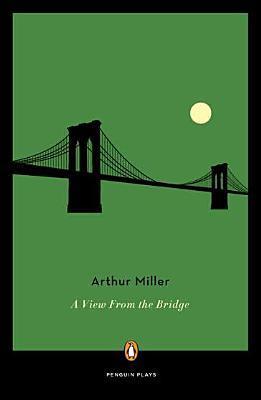
Arthur Miller's play A View from the Bridge is a tragic masterpiece of the inexorable unravelling of a man, set in a close-knit Italian-American community in 1950s New York.Eddie Carbone is a longshoreman and a straightforward man, with a strong sense of decency and of honour. For Eddie, it's a privilege to take in his wife's cousins, Marco and Rodolpho, straight off the boat from Italy. But, as his niece Catherine begins to fall for one of them, it's clear that it's not just, as Eddie claims, that he's too strange, too sissy, too careless for her, but that something bigger, deeper is wrong - and wrong inside Eddie, in a way he can't face. Something which threatens the happiness of their whole family.

As Howard Taubman outlines the play: "At the outset Quentin emerges, moves forward and seats himself on the edge of the stage and begins to talk, like a man confiding in a friend. In the background are key figures in his life, and they move in and out of his narrative. The narration shades into scenes, little and big. They are revelations and illuminations. They remind Quentin of an awkward young girl whom he made proud of herself. They bring the tortured image of his mother's death and another of his mother's fury with his father, who lost all in trying to save a floundering business. They crisscross through his relations with a number of women the first wife who wanted to be a separate person, the second who drove him into a separateness and a possible third who knew, as a German raised in a furnace of concentration camps, that 'survival can be hard to bear.' These intertwining images bring back the memories of inquisition when men were asked to name names of those who had joined with them in a communism that they mistook for a better future AFTER THE FALL is a pain-wracked drama; it is also Mr. Miller's maturest For to sit in Mr. Miller's theater is to be in an adult world concerned with a search that cuts to the bone."

Set on the gritty Brooklyn waterfront, "A View from the Bridge" follows the cataclysmic downfall of Eddie Carbone, who spends his days as a hardworking longshoreman and his nights at home with his wife, Beatrice, and niece, Catherine. But the routine of his life is interrupted when Beatrice's cousins, illegal immigrants from Italy, arrive in New York. As one of them embarks on a romance with Catherine, Eddie's envy and delusion plays out with devastating consequences.

Written in 1945, Focus was Arthur Miller's first novel and one of the first books to directly confront American anti-Semitism. It remains as chilling and incisive today as it was at the time of its controversial debut. As World War II draws to a close, anti-Semitism is alive and well in Brooklyn, New York. Here, Newman, an American of English descent, floats through a world of multiethnic neighborhoods indifferent to the racism around him. That is, until he begins wearing glasses that render him "Jewish" in the eyes of others, making him the target of anti-Semitic persecution. As he and his wife find friendship and support from a Jewish immigrant, Newman slowly begins to understand the racial hatreds that surround him."A strong, sincere book bursting with indignation." ( The New York Times Book Review )

Now a Broadway play starring Mark Ruffalo, Tony Shalhoub, Danny DeVito, and Jessica Hecht, Miller’s riveting story about family, sacrifice, and the struggle to make peace with the past.Years after an angry breakup, Victor and Walter Franz are reunited by the death of their father. As they sort through his possessions in an old brownstone attic, the memories evoked by his belongings stir up old hostilities. The Price was nominated for two Tony Awards, including best play.

In Vichy France in 1942, eight men and a boy are seized by the collaborationist authorities and made to wait in a building that may be a police station. Some of them are Jews. All of them have something to hide—if not from the Nazis, then from their fellow detainees and, inevitably, from themselves. For in this claustrophobic antechamber to the death camps, everyone is guilty. And perhaps none more so than those who can walk away alive.In Incident at Vichy, Arthur Miller re-creates Dante's hell inside the gaping pit that is our history and populates it with sinners whose crimes are all the more fearful because they are so recognizable."One of the most important plays of our time . . . Incident at Vichy returns the theater to greatness." —The New York Times

A stage adaptation of the drama "An Enemy of the People" by Henrik Ibsen in which a Norwegian doctor is shunned by the townspeople after he discovers their famous spring water is really poisoned.____When Dr. Stockmann discovers that the water in the small Norwegian town in which he is the resident physician has been contaminated, he does what any responsible citizen would do: reports it to the authorities. But Stockmann's good deed has the potential to ruin the town's reputation as a popular spa destination, and instead of being hailed as a hero, Stockmann is labeled an enemy of the people. Arthur Miller's adaptation of Henrik Ibsen's classic drama is a classic in itself, a penetrating exploration of what happens when the truth comes up against the will of the majority. This edition includes Arthur Miller’s preface and an introduction by John Guare.

Set in Brooklyn, this gripping mystery begins when attractive, level-headed Sylvia Gellburg suddenly loses her ability to walk. The only clue to her mysterious ailment lies in her obsession with news accounts from Germany.

The author looks back on his childhood, his memories of the Depression and the Spanish Civil War, his long career as a playwright, and his marriage to Marilyn Monroe.

A story of four lost souls - the beautiful Roslyn who has never belonged to anyone or anthything, and three other misfits who roam the open land existing on the little money made from riding in rodeos - who meet in Reno to discover that freedom has its price, and the heart its rules.

“Miller takes his rightful place in The Library of America with this volume.” — Library Journal (starred review)In the inaugural volume of its collected edition of Miller’s plays, The Library of America gathers the works from the 1940s and 1950s that electrified theatergoers and established Miller as one of the indispensable voices of the postwar era. Among the plays included are All My Sons , the story of an industrialist confronted with his moral lapses during World War II; Death of a Salesman , the wrenching tragedy of Willy Loman’s demise; The Crucible , at once a riveting reconstruction of the Salem witch trials and a parable of McCarthyism; and A View from the Bridge , Miller’s tale of betrayal among Italian immigrants in Brooklyn, presented here in both the original one-act and revised two-act versions.This volume also contains the intriguing early drama The Man Who Had All the Luck , the first of Miller’s plays to be produced on Broadway, along with his adaptation of Ibsen’s An Enemy of the People , the autobiographical one-act A Memory of Two Mondays , and Miller’s novella The Misfits , based on the screenplay he wrote for Marilyn Monroe.LIBRARY OF AMERICA is an independent nonprofit cultural organization founded in 1979 to preserve our nation’s literary heritage by publishing, and keeping permanently in print, America’s best and most significant writing. The Library of America series includes more than 300 volumes to date, authoritative editions that average 1,000 pages in length, feature cloth covers, sewn bindings, and ribbon markers, and are printed on premium acid-free paper that will last for centuries.

القصة القصيرة الرائعة من عمل المسرحي الحائز على جائزة بوليتزر وأحد من أعظم كُتّابِ القرن العشرين. ونجد في هذا العمل دقّة، وعظمة روحِ مسرحيّاتِ ميللر الكلاسيكية.

The forgotten classic that launched the career of one of America's greatest playwrightsA Penguin ClassicIt took more than fifty years for The Man Who Had All the Luck to be appreciated for what it truly the first stirrings of a genius that would go on to blossom in such masterpieces as Death of a Salesman and The Crucible . Infused with the moral malaise of the Depression era, the parable-like drama centers on David Beeves, a man whose every obstacle to personal and professional success seems to crumble before him with ease. But his good fortune merely serves to reveal the tragedies of those around him in greater relief, offering what David believes to be evidence of a capricious god or, worse, a godless, arbitrary universe. David’s journey toward fulfillment becomes a nightmare of existential doubts, a desperate grasp for reason in a cosmos seemingly devoid of any, and a struggle that will take him to the brink of madness. This Penguin Classics edition includes an introduction by Christopher Bigsby.For more than seventy years, Penguin has been the leading publisher of classic literature in the English-speaking world. With more than 1,700 titles, Penguin Classics represents a global bookshelf of the best works throughout history and across genres and disciplines. Readers trust the series to provide authoritative texts enhanced by introductions and notes by distinguished scholars and contemporary authors, as well as up-to-date translations by award-winning translators.

A car wreck on the slopes of Mt. Morgan puts poet and insurance tycoon Lyman Felt in the hospital. While Lyman recovers, two women meet in the hospital to discover that they are both married to him. With his secrets exposed, Lyman tries to justify himself to the two women--the prim, cultured Theo and the restless, ambitious Leah--at the same time hoping to convince himself that he is blameless. Moving between broad farce and delicate tragedy, The Ride Down Mt. Morgan reveals the struggle between honesty with others and honesty with oneself. This new edition incorporates the revisions Miller wrote for the acclaimed 1998 Public Theatre production starring Patrick Stewart.

This volume contains four of the most important and famous plays of the American theatre. All were written by Arthur Miller within a ten-year period which began with his first Broadway hit in 1947: 'With the production of All My Sons,' wrote Brooks Atkinson in the New York Times, 'the theatre has acquired a genuine new talent.' This hit was followed by an even greater Death of a Salesman. 'A great play of our day', wrote the New York Herald Tribune and the play has gone on to become the classic American tragedy of Willy Loman, a salesman who becomes disillusioned with the American dream. The Crucible(1953) was produced during the McCarthy era and became a parable of the witch-hunting practises of a government rooting out Communists. A View from the Bridge(1955) concerns the lives of longshoremen in the Brooklyn waterfront and has remained one of Miller's most produced plays. A Memory of Two Mondays, a one-act play, was written as a companion piece to A View from the Bridge. "The greatest American dramatist of our age" (Evening Standard)

This classic collection—the only one-volume selection of Arthur Miller's work available—presents a rich cross section of writing from one of our most influential and humane playwrights, containing in full his masterpieces The Crucible and Death of a Salesman. This essential collection also includes the complete texts of After the Fall, The American Clock, The Last Yankee, and Broken Glass, winner of the Olivier Award for Best Play of 1995, as well as excerpts from Miller's memoir Timebends. An essay by Harold Clurman and Christopher Bigsby's introduction discuss Miller's standing as one of the greatest American playwrights of all time and his importance to twentieth-century literature.Contents:Biographical notesIntroduction to the Original Edition by Harold ClurmanIntroduction to the Revised Edition by Christopher BigsbyTimebends (excerpt from the autobiography) (1987)The Golden Years (excerpt from a play) (1939-1940)Death of a Salesman (1949)The Crucible (1953)After the Fall (1964)The American Clock (1980)The Last Yankee (1993)Broken Glass (1994)

A moving, final collection of stories by Arthur Miller Throughout his career as one of the foremost playwrights of the twentieth century, Arthur Miller wrote a remarkable series of highly regarded short stories, pieces that reveal the same profound insight, humanism, and empathy that are the hallmarks of his great dramatic works. Presence is a posthumous gathering of Miller’s last published fiction, a group of stories that appeared in The New Yorker, Harper’s, Esquire, and elsewhere. “Bulldog” describes a young teenager’s surprising first sexual experience while “Presence” relates a man’s encounter with a woman he has just seen making love on a beach. “Beavers” tells a haunting tale of nature, creation, and destruction. In “The Performance,” a Jewish tap dancer enthralls Hitler. “The Bare Manuscript” reveals a writer’s unusual methods to revive his muse, and, finally, “The Turpentine Still” presents a portrait of a man examining his legacy. Displaying the sureness of an artist in his autumnal prime, Presence is a gift that all fans of Miller’s work, as well as readers of contemporary fiction, will welcome.

A Memory of Two Mondays is a one-act play by Arthur Miller. Based on Miller's own experiences, the play focuses on a group of desperate workers earning their livings in a Brooklyn automobile parts warehouse during the Great Depression in the 1930s, a time of 25 percent unemployment in the United States. Concentrating more on character than plot, it explores the dreams of a young man yearning for a college education in the midst of people stumbling through the workday in a haze of hopelessness and despondency and alcoholism. Einstein Books' edition of "A Memory Of Two Mondays" contains supplementary â "Tragedy And The Common Man", an essay by Arthur Miller. â An excerpt from "An Enemy Of The People", by Arthur Miller. â A few selected quotes of Arthur Miller.

A searing drama of the Holocaust—and the remarkable, moving story of the Auschwitz Women’s Orchestra Paris, 1942. Fania Fénelon, a popular Jewish nightclub singer, is arrested by the occupying Germans. Sent to Auschwitz in a packed freight-car, shorn of her hair, tattooed with an identifying number, starved, and subjected to harsh labor, she loses all traces of her former self. But her life at the camp changes dramatically when she is drafted into the Women’s Orchestra, a desperate little ensemble that marches the prisoners out to work and gives concerts for the German high brass. Led by Alma Rosé, a sternly ambitious German-Jewish conductor who knows that her job is a matter of life and death, Fania and her fellow musicians must confront the horror taking place around them while pushing themselves to create beauty in the midst of despair. Based on Fania Fénelon’s memoir of the same name, Arthur Miller’s Playing for Time was first produced as a CBS television drama starring Vanessa Redgrave before being adapted for the stage.

In his long career, Arthur Miller has charted some of the most hidden aspects of the American character, and made us recognize ourselves. With Homely Girl, A Life , he turns his attention to a smaller, more intimate, canvas, but one that in its deceptive delicacy still encompasses a vast range of human fears, ambitions, and desires. Janice—the eponymous homely girl—has hated her face ever since she was a child and her mother held up Ivory Snow advertisements to her, saying, "Now that is beauty." Homely she is, but also fiercely herself. Still,it is not until she falls in love with a blind musician that she feels her full nature unfold in this exquisite portrait of a woman finding a language to describe herself. Flanked by two stories also set in Manhattan, "Fame" and "Fitter's Night," Homely Girl, A Life pays homage to a city constantly reinventing itself—and to the classic Miller themes of work, honor, and identity. "Chekhovian . . . deserves praising to the top of the highest skyscraper for its humanity, wit, depth" —A.N. Wilson

Crucible / Arthur Miller --Conversation with an American writer / Yevgeny Yevtushenko --Guilt / Clifford Lindsey Alderman --How to spot a witch / Adam Goodheart --Young Goodman Brown / Nathaniel Hawthorne --Great Fear / J. Ronald Oakley --Justice Denied in Massachusetts / Edna St. Vincent Millay --Very Proper Gander / James Thurber --Piece of String / Guy de Maupassant.

Arthur Miller’s penultimate play, Resurrection Blues , is a darkly comic satirical allegory that poses the What would happen if Christ were to appear in the world today? In an unidentified Latin American country, General Felix Barriaux has captured an elusive revolutionary leader. The rebel, known by various names, is rumored to have performed miracles throughout the countryside. The General plans to crucify the mysterious man, and the exclusive television rights to the twenty-four-hour reality-TV eventhave been sold to an American network for $25 million. An allegory that asserts the interconnectedness of our actions and each person’s culpability in world events, Resurrection Blues is a comedic and tragic satire of precarious morals in our media-saturated age.

The Creation of the World and Other Business. by Arthur Miller, Miller, Arthur (1998) Paperback

Two marriages are transformed when the husbands meet in the visitor's room of a mental hospital, as their clinically depressed wives find the hope and strength to change their lives

Excellent condition on the paperback book ; pages are clean and bright; the binding is tight; the spine is intact without creases; very light wear on the cover; 90 pages; ”x8”; 1992 printing; published by Dramatists Play Service Press(j6)

To celebrate the centennial of his birth, the collected plays of America’s greatest twentieth-century dramatist in a Penguin Classics Deluxe Edition In the history of postwar American art and politics, Arthur Miller casts a long shadow as a playwright of stunning range and power whose works held up a mirror to America and its shifting values. The Penguin Arthur Miller celebrates Miller’s creative and intellectual legacy by bringing together the breadth of his plays, which span the decades from the 1930s to the new millennium. From his quiet debut, The Man Who Had All the Luck , and All My Sons , the follow-up that established him as a major talent, to career hallmarks like The Crucible and Death of a Salesman , and later works like Mr. Peters’ Connections and Resurrection Blues , the range and courage of Miller’s moral and artistic vision are here on full display.Including eighteen plays—some known by all and others that will come as discoveries to many readers— The Penguin Arthur Miller is a collectible treasure for fans of Miller’s drama and an indispensable resource for students of the theatre.The Penguin Arthur Miller The Man Who Had All the Luck , All My Sons , Death of a Salesman , An Enemy of the People , The Crucible , A View from the Bridge , After the Fall , Incident at Vichy , The Price , The Creation of the World and Other Business , The Archbishop’s Ceiling , The American Clock , Playing for Time , The Ride Down Mt. Morgan , The Last Yankee , Broken Glass , Mr. Peters’ Connections , and Resurrection Blues . For more than sixty-five years, Penguin has been the leading publisher of classic literature in the English-speaking world. With more than 1,500 titles, Penguin Classics represents a global bookshelf of the best works throughout history and across genres and disciplines. Readers trust the series to provide authoritative texts enhanced by introductions and notes by distinguished scholars and contemporary authors, as well as up-to-date translations by award-winning translators.

The setting is an ornate room in a former Archbishop's palace in an Eastern European capital, a room which has probably been bugged by the secret police. The central character is a middle-aged author, Sigmund, who, having embarrassed the current regime, is faced with the choice of detention and punishment or defection to the West. He is encouraged in the latter by two of his former friends, also writers, his compatriot Marcus, an ex-political prisoner now in favor with the regime, and Adrian, a visiting American with strongly liberal ideals. The situation is complicated by the presence of Maya, a poet and actress, who has been the mistress of all three. It is the complexity of the relationship of these four, the inextricable interweaving of politics, art and sex, and the constant uncertainty as to whether what they say may be overheard that makes for a rich and deeply intriguing play and one that, in the final essence, raises questions not only about morality and individual responsibility but also about the very nature of reality in a world where absolutes seem to shift and blur as expediency dictates.