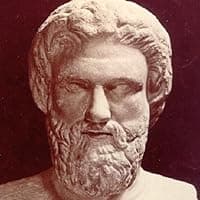
Aristophanes
Aristophanes (Greek: Αριστοφάνης; c. 446 – c. 386 BC) was an Ancient Greek comic playwright from Athens and a poet of Old Attic Comedy. He wrote in total forty plays, of which eleven survive virtually complete today. These provide the most valuable examples of a genre of comic drama known as Old Comedy and are used to define it, along with fragments from dozens of lost plays by Aristophanes and his contemporaries. Also known as "The Father of Comedy" and "the Prince of Ancient Comedy", Aristophanes has been said to recreate the life of ancient Athens more convincingly than any other author. His powers of ridicule were feared and acknowledged by influential contemporaries; Plato singled out Aristophanes' play The Clouds as slander that contributed to the trial and subsequent condemning to death of Socrates, although other satirical playwrights had also caricatured the philosopher. Aristophanes' second play, The Babylonians (now lost), was denounced by Cleon as a slander against the Athenian polis. It is possible that the case was argued in court, but details of the trial are not recorded and Aristophanes caricatured Cleon mercilessly in his subsequent plays, especially The Knights, the first of many plays that he directed himself. "In my opinion," he says through that play's Chorus, "the author-director of comedies has the hardest job of all."
21 Books Written

Whether his target is the war between the sexes or his fellow playwright Euripides, Aristophanes is the most important Greek comic dramatist—and one of the greatest comic playwrights of all time. His writing—at once bawdy and delicate—brilliantly fuses serious political satire with pyrotechnical bombast, establishing the tradition of comedy as high art. His messages are as timely and relevant toda

Three Plays by Aristophanes presents Aristophanes' three women's comedies in a single volume and in unexpurgated, annotated translations. There are introductions to each play, and general introductory chapters cover Aristophanes, his theater and the women in his plays; an appendix contains relevant additional material from Aristophanes' lost comedies. Three Plays by Aristophanes will interest both

A poet who hated an age of decadence, armed conflict, and departure from tradition, Aristophanes' comic genius influenced the political and social order of his own fifth-century Athens. But as Moses Hadas writes in his introduction to this volume, 'His true claim upon our attention is as the most brilliant and artistic and thoughtful wit our world has known.' Includes The Acharnians, The Birds, Th
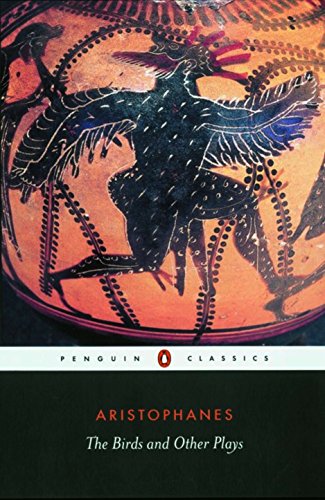
Offering a window into the world of ordinary Athenians, Aristophanes' The Birds and Other Plays is a timeless set of comedies, combining witty satire and raucous slapstick to wonderful effect. This Penguin Classics edition is translated from the Greek by David Barrett and Alan H. Sommerstein.The plays in this volume all contain Aristophanes' trademark bawdy comedy and dazzling v

Aristophanes' Peace was performed at the City Dionysia in Athens in 421 B.C. as a decade-long war with Sparta seemed finally to be drawing to an end, and is one of only eleven extant plays by the greatest Old Comic poet. Olson's edition of the play, which replaces Platnauer's of 1969, is based on a complete new collation of the manuscripts, many of which have never been adequately reported before.

Ecclesiazusae, probably produced in 391 BC, is at once a typically Aristophanic fantasy of gender inversion, obscenity and farce, the earliest surviving work in the western Utopian tradition, and the source of a blueprint for a communist society on which Plato may well have drawn in his Republic.

Originally adapted for the stage, Peter Meineck's revised translations achieve a level of fidelity appropriate for classroom use while managing to preserve the wit and energy that led The New Yorker to judge his Clouds The best Greek drama we've ever seen anywhere," and The Times Literary Supplement to describe his Wasps as "Hugely enjoyable and very, very funny. A general Introduction, introducti

Marrying deft social commentary to a rich, earthy comedy, the three comedies collected in Aristophanes' The Frogs and Other Plays offers a unique insight into one of the most turbulent periods in Ancient Greek history. This Penguin Classics edition is translated by David Barrett with revisions, an introduction and notes by Shomit Dutta.The master of ancient Greek comic drama, Ar

The play is a satire on the social and political life of classical Athens during the Peloponnesian War and in this respect it is typical of all the dramatist's early plays. It is unique however in the relatively small number of its characters and this was due to its scurrilous preoccupation with one man, the pro-war populist Cleon.

This is a reproduction of the original artefact. Generally these books are created from careful scans of the original. This allows us to preserve the book accurately and present it in the way the author intended. Since the original versions are generally quite old, there may occasionally be certain imperfections within these reproductions. We're happy to make these classics available again for fut

This new paperback edition of Aristophanes' popular play includes the complete Greek text and extensive notes and commentary. Dover examines the two versions of the play, recounts the history of the text, and analyzes a number of problems surrounding the play's overall interpretation, including the Greek notion of right and wrong, the purpose of the chorus, and Aristophanes' sexual jokes.

Thesmophoriazusae was performed in Athens in 411 BCE, most likely at the City Dionysia, and is among the most brilliant of Aristophanes' eleven surviving comedies. It is the story of the crucial moment in a quarrel between the tragic playwright Euripides and Athens' women, who accuse him of slandering them in his plays and are holding a meeting at one of their secret festivals to set a penalty for

Aristophanes' comic masterpiece of war and sex remains one of the greatest plays ever written. Led by the title character, the women of the warring city-states of Greece agree to withhold sexual favours with their husbands until they agree to cease fighting. The war of the sexes that ensues makes Lysistrata a bawdy comedy without peer in the history of theatre.

The story of 'Plutus' concerns Chremylus, a poor but just man, who accompanied by his body-servant Cario, consults the Delphic Oracle concerning his son, whether he ought not to be instructed in injustice and knavery and the other arts whereby worldly men acquire riches. By way of answer the god only tells him that he is to follow whomsoever he first meets upon leaving the temple, who proves to be

Wasps was first performed at the festival of the Lenaia early in 422 B.C. It is arguably one of Aristophanes' most entertaining and characteristic works, and the lack of serious difficulties in the text makes it accessible to the less advanced student of Greek. This edition, first published in 1971, is intended for students and scholars, stressing the comic and dramatic qualities of the play while

Contains Lysistrata, The Congresswomen, The Acharnians, and The Frogs

Aristophanes (ca. 446-386 b.c.), one of the world's greatest comic dramatists, has been admired since antiquity for his iridescent wit and beguiling fantasy, exuberant language, and brilliant satire of the social, intellectual, and political life of Athens at its height. In this third volume of a new Loeb Classical Library edition of Aristophanes' plays, Jeffrey Henderson presents a freshly edited


This book was converted from its physical edition to the digital format by a community of volunteers. You may find it for free on the web. Purchase of the Kindle edition includes wireless delivery.

Aristophanes: Four Plays: Clouds, Birds, Lysistrata, Women of the Assembly
by Aristophanes
Rating: 4.1 ⭐
Capturing the antic outrageousness and lyrical brilliance of antiquity’s greatest comedies, Aaron Poochigian’s Four Plays brings these classic dramas to vivid life for a twenty-first century audience. The citizens of ancient Athens enjoyed a freedom of speech as broad as our own. This freedom, parrhesia, the right to say what one pleased, how and when one pleased, and to whom, had no more fervent

La utopía es el espacio natural de la comedia política. En el «país de la risa» todo está permitido y la carcajada se erige en un fin en sí un «mundo al revés» donde lo trascendente se vuelve fútil y lo absurdo trascendente, donde los hijos pegan a sus padres o las mujeres, hartas de unos hombres que derrochan los dineros en hacer la guerra, toman la Acrópolis y convocan una huelga de sexo. Las si