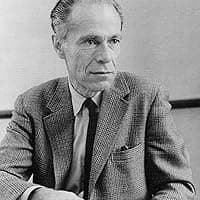
Albert O. Hirschman
Albert Otto Hirschman was an economist and the author of several books on political economy and political ideology. His first major contribution was in the area of development economics. Here he emphasized the need for unbalanced growth. He argued that disequilibria should be encouraged to stimulate growth and help mobilize resources, because developing countries are short of decision making skills. Key to this was encouraging industries with many linkages to other firms. His later work was in political economy and there he advanced two schemata. The first describes the three basic possible responses to decline in firms or polities (quitting, speaking up, staying quiet) in Exit, Voice, and Loyalty (1970). The second describes the basic arguments made by conservatives (perversity, futility and jeopardy) in The Rhetoric of Reaction (1991).
1 Books Written

Exit, Voice, and Loyalty: Responses to Decline in Firms, Organizations, and States
by Albert O. Hirschman
Rating: 4.1 ⭐
An innovator in contemporary thought on economic and political development looks here at decline rather than growth. Albert O. Hirschman makes a basic distinction between alternative ways of reacting to deterioration in business firms and, in general, to dissatisfaction with organizations: one, "exit," is for the member to quit the organization or for the customer to switch to the competing