
Alan Noble
Dr. O. Alan Noble is Associate Professor of English at Oklahoma Baptist University and author of numerous articles and a couple books. In his youth, Alan lived in Lancaster, CA, where he was very homeschooled by his mother. At 16, he finished high school and began attending Antelope Valley College, pursuing a certificate in music which he earned but never filled out the paperwork for, so it probably doesn't count. He did, however, meet his wife, Brittany, at AVC, which definitely counts. Alan continued his undergraduate work at the Cal State Bakersfield satellite campus at AVC, earning his degree in English. Then he earned his Master's in English at CSUB-AV, writing his thesis on Cormac McCarthy's Blood Meridian under the supervision of Dr. Steven Frye. Other things Alan did while in Southern California: tutored high school felons at a probation camp; substituted at various high schools; helped produce, write, rap, engineer, and record two hip-hop albums; taught composition and literature at Antelope Valley College; went bald; got married. In 2007, Richard Clark contacted Alan about joining a new venture he was starting called Christ and Pop Culture. That November, Alan began writing and then editing for the site. Brittany and Alan moved to Waco, TX to pursue graduate degrees at Baylor University in 2008. While at Baylor, Alan studied under Ralph Wood, David Lyle Jeffrey, Luke Ferretter, and Richard Russell. His dissertation was written under the supervision of Dr. Ferretter and was titled Manifestations of transcendence in twentieth-century American fiction : F. Scott Fitzgerald, Carson McCullers, J.D. Salinger, and Cormac McCarthy. Charles Taylor's work on secularism and the self formed the theoretical basis for the dissertation and much of Alan's later writing. While in Waco, Brittany and Alan had two children, Eleanor and Quentin, and they attended Redeemer Presbyterian Church. At nights, Alan continued to write and edit for Christ and Pop Culture, now with the title Managing Editor. In the fall of 2014, the Nobles moved to Shawnee, OK, where Alan accepted a position as Assistant Professor of English at Oklahoma Baptist University. After Richard Clark left Christ and Pop Culture for Christianity Today, Alan became editor-in-chief at the site. At this time, Alan began writing for The Atlantic, Christianity Today, and First Things, particularly on issues related to pluralism and secularism. The Nobles' third child, Frances, was born in 2015. As the 2016 election ramped up, Alan launched the group Public Faith with Michael Wear to offer an alternative evangelical political voice. He also joined The AND Campaign as an advisor. Alan has written articles for Christian publications such as Modern Reformation, InTouch Magazine, and Christianity Today and for secular publications like VOX, Buzzfeed, and The Atlantic. He has been interviewed, quoted, or cited in a number of major publications, including The New York Times, The Washington Post, MTV News, MSNBC, The Guardian, Buzzfeed, Politico, Village Voice, Yahoo! News, ThinkProgress, The Blaze, WORLD Magazine, and Slate. And he has spoken at colleges, churches, and youth groups on a range of topics related to the church and culture. The Nobles attend City Pres in Oklahoma City.
4 Books Written

Disruptive Witness: Speaking Truth in a Distracted Age
by Alan Noble
Rating: 4.2 ⭐
• 2 recommendations ❤️
We live in a distracted, secular age. These two trends define life in Western society today. We are increasingly addicted to habits―and devices―that distract and "buffer" us from substantive reflection and deep engagement with the world. And we live in what Canadian philosopher Charles Taylor calls "a secular age"―an age in which all beliefs are equally viable and real transcendence is less and less plausible. Drawing on Taylor's work, Alan Noble describes how these realities shape our thinking and affect our daily lives. Too often Christians have acquiesced to these trends, and the result has been a church that struggles to disrupt the ingrained patterns of people's lives. But the gospel of Jesus is inherently disruptive: like a plow, it breaks up the hardened surface to expose the fertile earth below. In this book Noble lays out individual, ecclesial, and cultural practices that disrupt our society's deep-rooted assumptions and point beyond them to the transcendent grace and beauty of Jesus. Disruptive Witness casts a new vision for the evangelical imagination, calling us away from abstraction and cliché to a more faithful embodiment of the gospel for our day.

We aren't always honest about how difficult normal human life is. For the majority of people, sorrow, despair, anxiety, and mental illness are everyday experiences. While we have made tremendous advancements in therapy and psychiatry, the burden of living still comes down to mundane choices that we each must make―like the daily choice to get out of bed. In this deeply personal essay, Alan Noble considers the unique burden of everyday life in the modern world. Sometimes, he writes, the choice to carry on amid great suffering―to simply get out of bed―is itself a powerful witness to the goodness of life, and of God.
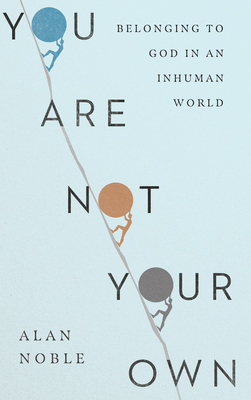
"You are your own, and you belong to yourself." This is the fundamental assumption of modern life. And if we are our own, then it's up to us to forge our own identities and to make our lives significant. But while that may sound empowering, it turns out to be a crushing responsibility--one that never actually delivers on its promise of a free and fulfilled life, but instead leaves us burned out, depressed, anxious, and alone. This phenomenon is mapped out onto the very structures of our society, and helps explain our society's underlying disorder. But the Christian gospel offers a strikingly different vision. As the Heidelberg Catechism puts it, "I am not my own, but belong with body and soul, both in life and in death, to my faithful Savior Jesus Christ." In You Are Not Your Own, Alan Noble explores how this simple truth reframes the way we understand ourselves, our families, our society, and God. Contrasting these two visions of life, he invites us past the sickness of contemporary life into a better understanding of who we are and to whom we belong.

You were told to live a meaningful life. But no one ever told you how. Our lives are shaped by contradictions. Competing voices tell us who to be, what to want, and how to live. The result? A fragmented moral imagination. We're handed a thousand broken messages and left to cobble together something resembling a life. But instead of clarity, we get exhaustion. Instead of wisdom, we get anxiety. This leaves you asking yourself How can I get through when I feel alone and confused? How can I live well in this broken and chaotic world? In To Live Well, Alan Noble shows you how you can not only endure but flourish in life. Through exploring the seven virtues of prudence, justice, fortitude, temperance, faith, hope, and love, you'll learn how to choose gracefully, act justly, suffer steadfastly, live moderately, believe soundly, hope resolutely, and love rightly. This book won't give you a ten-step plan to fix everything. It doesn't promise clarity overnight. But it will invite you into something an ancient, time-tested path of habits of heart and mind that shape who we are and how we live. With honesty, theological depth, and a mentor's heart, Noble names your confusion and offers an antidote—not by escaping the mess but by learning how to live faithfully within it. If you've ever longed for something solid in a world that just wants to sell you more temporary stuff, To Live Well is a good place to begin.