
Alan Jacobs
Alan Jacobs is a scholar of English literature, literary critic, and distinguished professor of the humanities at Baylor University. Previously, he held the Clyde S. Kilby Chair of English at Wheaton College until 2012. His academic career has been marked by a deep engagement with literature, theology, and intellectual history. Jacobs has written extensively on reading, thinking, and culture, contributing to publications such as The Atlantic, First Things, and The New Atlantis. His books explore diverse topics, from the intellectual legacy of Christian humanism (The Year of Our Lord 1943) to the challenges of modern discourse (How to Think). He has also examined literary figures like C. S. Lewis (The Narnian) and W. H. Auden. His work often bridges literature and philosophy, with books such as A Theology of Reading: The Hermeneutics of Love reflecting on the ethical dimensions of interpretation. An evangelical Anglican, Jacobs continues to influence discussions on faith, literature, and the role of reading in contemporary life.
27 Books Written

The Year of Our Lord 1943: Christian Humanism in an Age of Crisis
by Alan Jacobs
Rating: 4.0 ⭐
• 2 recommendations ❤️
By early 1943, it had become increasingly clear that the Allies would win the Second World War. Around the same time, it also became increasingly clear to many Christian intellectuals on both sides of the Atlantic that the soon-to-be-victorious nations were not culturally or morally prepared for their success. A war won by technological superiority merely laid the groundwork for a post-war society governed by technocrats. These Christian intellectuals-Jacques Maritain, T. S. Eliot, C. S. Lewis, W. H. Auden, and Simone Weil, among others-sought both to articulate a sober and reflective critique of their own culture and to outline a plan for the moral and spiritual regeneration of their countries in the post-war world.In this book, Alan Jacobs explores the poems, novels, essays, reviews, and lectures of these five central figures, in which they presented, with great imaginative energy and force, pictures of the very different paths now set before the Western democracies. Working mostly separately and in ignorance of one another's ideas, the five developed a strikingly consistent argument that the only means by which democratic societies could be prepared for their world-wide economic and political dominance was through a renewal of education that was grounded in a Christian understanding of the power and limitations of human beings. The Year of Our Lord 1943 is the first book to weave together the ideas of these five intellectuals and shows why, in a time of unprecedented total war, they all thought it vital to restore Christianity to a leading role in the renewal of the Western democracies.

How to Think is a contrarian treatise on why we're not as good at thinking as we assume - but how recovering this lost art can rescue our inner lives from the chaos of modern life. As a celebrated cultural critic and a writer for national publications like The Atlantic and Harper's, Alan Jacobs has spent his adult life belonging to communities that often clash in America's culture wars. And in his years of confronting the big issues that divide us--political, social, religious--Jacobs has learned that many of our fiercest disputes occur not because we're doomed to be divided, but because the people involved simply aren't thinking.Most of us don't want to think, Jacobs writes. Thinking is trouble. Thinking can force us out of familiar, comforting habits, and it can complicate our relationships with like-minded friends. Finally, thinking is slow, and that's a problem when our habits of consuming information (mostly online) leave us lost in the spin cycle of social media, partisan bickering, and confirmation bias.In this smart, endlessly entertaining book, Jacobs diagnoses the many forces that act on us to prevent thinking--forces that have only worsened in the age of Twitter, "alternative facts," and information overload--and he also dispels the many myths we hold about what it means to think well. (For example: It's impossible to "think for yourself.")Drawing on sources as far-flung as novelist Marilynne Robinson, basketball legend Wilt Chamberlain, British philosopher John Stuart Mill, and Christian theologian C.S. Lewis, Jacobs digs into the nuts and bolts of the cognitive process, offering hope that each of us can reclaim our mental lives from the impediments that plague us all. Because if we can learn to think together, maybe we can learn to live together, too.

A journey into the imagination of C.S. Lewis explores the themes and life events that contributed to The Chronicles of Narnia, the most enduring classics of children’s literature C.S. Lewis was one of the intellectual giants of the 20th century and arguably the most influential Christian writer of his day. Yet among his poetry, literary history and criticism, novels and Christian apologetics stands a unique, delightfully imaginative children’s series called The Chronicles of Narnia, which have become enduring classics. Alan Jacobs takes this imaginary world of Narnia and uses the themes and stories found within to explore the imaginative life of C.S. Lewis. Not just a conventional, straightforward biography of Lewis, Jacobs instead seeks a more elusive an understanding of the way Lewis’s experiences, both direct and literary, formed themselves into patterns―themes that then shaped his thought and writings, especially the stories of Narnia.
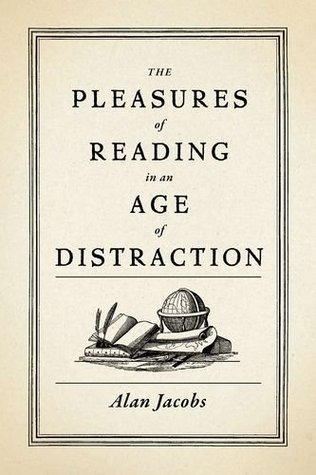
In recent years, cultural commentators have sounded the alarm about the dire state of reading in America. Americans are not reading enough, they say, or reading the right books, in the right way. In this book, Alan Jacobs argues that, contrary to the doomsayers, reading is alive and well in America. There are millions of devoted readers supporting hundreds of enormous bookstores and online booksellers. Oprah's Book Club is hugely influential, and a recent NEA survey reveals an actual uptick in the reading of literary fiction. Jacobs's interactions with his students and the readers of his own books, however, suggest that many readers lack confidence; they wonder whether they are reading well, with proper focus and attentiveness, with due discretion and discernment. Many have absorbed the puritanical message that reading is, first and foremost, good for you--the intellectual equivalent of eating your Brussels sprouts. For such people, indeed for all readers, Jacobs offers some simple, powerful, and much needed advice: read at whim, read what gives you delight, and do so without shame, whether it be Stephen King or the King James Version of the Bible. In contrast to the more methodical approach of Mortimer Adler's classic How to Read a Book (1940), Jacobs offers an insightful, accessible, and playfully irreverent guide for aspiring readers. Each chapter focuses on one aspect of approaching literary fiction, poetry, or nonfiction, and the book explores everything from the invention of silent reading, reading responsively, rereading, and reading on electronic devices. Invitingly written, with equal measures of wit and erudition, The Pleasures of Reading in an Age of Distraction will appeal to all readers, whether they be novices looking for direction or old hands seeking to recapture the pleasures of reading they first experienced as children.
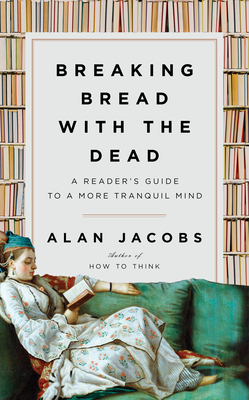
From the author of How to Think and The Pleasures of Reading in an Age of Distraction, a literary guide to engaging with the voices of the past to stay sane in the presentW. H. Auden once wrote that "art is our chief means of breaking bread with the dead." In his brilliant and compulsively readable new treatise, Breaking Bread with the Dead, Alan Jacobs shows us that engaging with the strange and wonderful writings of the past might help us live less anxiously in the present—and increase what Thomas Pynchon once called our "personal density."Today we are battling too much information in a society changing at lightning speed, with algorithms aimed at shaping our every thought—plus a sense that history offers no resources, only impediments to overcome or ignore. The modern solution to our problems is to surround ourselves only with what we know and what brings us instant comfort. Jacobs's answer is the opposite: to be in conversation with, and challenged by, those from the past who can tell us what we never thought we needed to know.What can Homer teach us about force? How does Frederick Douglass deal with the massive blind spots of America's Founding Fathers? And what can we learn from modern authors who engage passionately and profoundly with the past? How can Ursula K. Le Guin show us truths about Virgil's female characters that Virgil himself could never have seen? In Breaking Bread with the Dead, a gifted scholar draws us into close and sympathetic engagement with texts from across the ages, including the work of Anita Desai, Henrik Ibsen, Jean Rhys, Simone Weil, Edith Wharton, Amitav Ghosh, Claude Lévi-Strauss, Italo Calvino, and many more.By hearing the voices of the past, we can expand our consciousness, our sympathies, and our wisdom far beyond what our present moment can offer.

While many of us are familiar with such famous words as, "Dearly beloved, we are gathered together here. . ." or "Ashes to ashes, dust to dust," we may not know that they originated with The Book of Common Prayer, which first appeared in 1549. Like the words of the King James Bible and Shakespeare, the language of this prayer book has saturated English culture and letters. Here Alan Jacobs tells its story. Jacobs shows how The Book of Common Prayer--from its beginnings as a means of social and political control in the England of Henry VIII to its worldwide presence today--became a venerable work whose cadences express the heart of religious life for many. The book's chief maker, Thomas Cranmer, Archbishop of Canterbury, created it as the authoritative manual of Christian worship throughout England. But as Jacobs recounts, the book has had a variable and dramatic career in the complicated history of English church politics, and has been the focus of celebrations, protests, and even jail terms. As time passed, new forms of the book were made to suit the many English-speaking nations: first in Scotland, then in the new United States, and eventually wherever the British Empire extended its arm. Over time, Cranmer's book was adapted for different preferences and purposes. Jacobs vividly demonstrates how one book became many--and how it has shaped the devotional lives of men and women across the globe.

Essayist and biographer Alan Jacobs introduces us to the world of original sin, which he describes as not only a profound idea but a necessary one. As G. K. Chesterton explains, "Only with original sin can we at once pity the beggar and distrust the king." Do we arrive in this world predisposed to evil? St. Augustine passionately argued that we do; his opponents thought the notion was an insult to a good God. Ever since Augustine, the church has taught the doctrine of original sin, which is the idea that we are not born innocent, but as babes we are corrupt, guilty, and worthy of condemnation. Thus started a debate that has raged for centuries and done much to shape Western civilization. Perhaps no Christian doctrine is more controversial; perhaps none is more consequential. Blaise Pascal claimed that "but for this mystery, the most incomprehensible of all, we remain incomprehensible to ourselves." Chesterton affirmed it as the only provable Christian doctrine. Modern scholars assail the idea as baleful and pernicious. But whether or not we believe in original sin, the idea has shaped our most fundamental institutions—our political structures, how we teach and raise our young, and, perhaps most pervasively of all, how we understand ourselves. In Original Sin , Alan Jacobs takes readers on a sweeping tour of the idea of original sin, its origins, its history, and its proponents and opponents. And he leaves us better prepared to answer one of the most important questions of Are we really, all of us, bad to the bone?

The Gnostic Gospels: Including the Gospel of Thomas, the Gospel of Mary Magdalene
by Alan Jacobs
Rating: 3.8 ⭐
A landmark collection of 14 texts from the Nag Hammadi library that shed new light on the esoteric knowledge of Gnosticism—including the Gospels of Mary Magdalene, Thomas, and Judas, and The Sophia of Jesus Christ. Discover the intimate conversations between Jesus and his Disciples. In 1945, several gospels, hidden since the first century, were found in the Egyptian Desert at Nag Hammadi. This discovery caused a sensation as the scrolls revealed the mysteries of the Gnostics—a movement which emerged during the formative period of Christianity. ‘Gnosis’, from the Greek, broadly meaning ‘hidden spiritual knowledge’, was associated with renouncing the material world, and focusing on attaining the life of the Holy Spirit. Many Christian sects are derived from the esoteric knowledge of Gnosticism. The gospels selected here by Alan Jacobs reveal intimate conversations between Jesus and his Disciples. The Gospel of Mary Magdalene sheds new light on his relationship with his favorite follower, while the Gospel of Thomas consists of mini-parables of deep inward and symbolic meaning—many of which are not found in the New Testament. The wisdom in this inspiring collection of texts is wholly relevant to our lives today, addressing the questions of good and evil, sin and suffering, and the path to salvation.

If the whole of the Christian life is to be governed by the “law of love”—the twofold love of God and one’s neighbor—what might it mean to read lovingly? That is the question that drives this unique book. Jacobs pursues this challenging task by alternating largely theoretical, theological chapters—drawing above all on Augustine and Mikhail Bakhtin—with interludes that investigate particular readers (some real, some fictional) in the act of reading. Among the authors considered are Shakespeare, Cervantes, Nabakov, Nicholson Baker, George Eliot, W.H. Auden, and Dickens. The theoretical framework is elaborated in the main chapters, while various counterfeits of or substitutes for genuinely charitable interpretation are considered in the interludes, which progressively close in on that rare creature, the loving reader. Through this doubled method of investigation, Jacobs tries to show how difficult it is to read charitably—even should one wish to, which, of course, few of us do. And precisely because the prospect of reading in such a manner is so offputting, one of the covert goals of the book is to make it seem both more plausible and more attractive.

Alan Jacobs is fond of the essay because it lets a writer do something that more formal pieces of writing follow the “vagaries of the mind,” let the writing follow its own path, encountering surprises and fresh insights along the way.In this new collection, Jacobs offers essays for companionable wayfaring. To be a Christian, he says, is to be a wayfarer, to move hopefully towards a cherished goal. These essays are a wayfarer’s notes, a record of ideas and experiences encountered on the pilgrim path. Gathered here are pieces serious and comic, eloquent and interesting. Jacobs muses on the usefulness and dangers of blogging, the art of dictionary making, the world of Harry Potter, and an appreciation of trees. He also includes several book reviews, including a wickedly witty poem.With Wayfaring, Jacobs continues his tradition of exploring Christian theology and experience by way of the essay, bringing serious musings within reach of us all.

Jacobs explains the art of the moral essay, then illustrates the actual execution of the moral essay on subjects such as Harry Potter, TV animal documentaries, and luckydipping in the Bible.

Shaming the Devil offers a series of reflections that explore how hard it is to tell the truth about the world of culture - and how central that task is to the Christian life.Employing the literary essay as a means for cultural criticism and using other writers and thinkers as friends and foils in his quest, Alan Jacobs revisits the question asked by Pilate and so many others throughout "What is truth?"In the first part of the book, Jacobs contemplates the work of people whom he takes to be exemplary truth Rebecca West, W. H. Auden, Albert Camus, Alexander Solzhenitsyn, Linda Gregerson, and Leon Kass. He then engages writers who challenge the search for Jean-Jacques Rousseau, Iris Murdoch, Wole Soyinka, Philip Pullman, and Anne Carson. The third section of the book consists of a single lengthy essay that pursues the provocative question of whether today's computer technology helps or hinders us in our pursuit of truth.

In the work of such major theologians as Lesslie Newbigin and Stanley Hauerwas, the “Christian story” is communal, and the individual Christian achieves meaning only through participation in this communally recounted narrative. While Alan Jacobs acknowledges the importance of the communal story, he suggests that something has been neglected in the development of narrative theology -- the narrative dimension of individual Christian lives.Looking Before and After encourages us to ask how individual lives can, in a specifically Christian sense, be meaningful, how we can discern and rightly interpret those meanings, and how we might tell our own stories in ways that avoid the dangers of presumption and despair. In his typically beautiful writing style, Jacobs here reinvigorates narrative theology and demonstrates the power of individual life stories well told and properly understood.
Since the publication of my book The Pleasures of Reading in an Age of Distraction, a number of people have asked me about my history as a reader: what I read when I was younger, how my reading shaped my own development, and so on. They are sometimes surprised to learn that almost all of my reading, before my college years, involved science (especially astronomy) and science fiction. In transforming myself into a literary reader—so literary that I became an English professor—I was in many ways making quite a break with my readerly past.But in the last decade or so I have found myself gradually shifting back towards those early interests. I haven’t ceased to be a literary reader, by any means, but my old attractions to science and technology, and to fictions that explore science and technology, have reasserted themselves.So largely in order to make sense of this matter for myself, I wrote an essay—a brief reader’s memoir—about my shifting allegiances. I think the story is worth reading not because I am especially interesting but because it makes a few valuable points about the shaping power of our early reading experiences, and about the relations between what C. P. Snow famously called “The Two Cultures” of the sciences and the humanities.

“He is present within, pouring out his grace. In dire need he comes to the rescue whether sought or unsought. He is the most intimate being, our very Self.” – V. 58, Sri Ramana Ashtottara Sri Ramana Maharshi, the sage of Arunachala – the holy mountain of Lord Shiva, was one of the world’s most influential spiritual teachers of our time. He taught the infallible way to Self-realisation through his unique method of ‘Self-Enquiry’ and the total devotional surrender of the egotistic mind to the inner Satguru dwelling in each one’s spiritual heart. He always spoke from the high authority of direct Self-knowledge. He could, and still does, invoke the real Self of pure Existence-Consciousness-Awareness-Love through the Silence of his Presence in his devotees. During his lifetime he led many to Self-realisation. His ashram at Tiruvannamalai is an active spiritual centre imparting the grace and knowledge of his Teaching. This brief biography acquaints you with significant details of his divine life and the essence of his Teaching. The author Alan Jacobs is well-known for his several books and anthologies Poetic Transcreations of the Bhagavad Gita and The Principal Upanishads. He also contributes to Ramanasramam’s spiritual journal, the Mountain Path. He is President of the Ramana Maharshi Foundation, UK.

This inspirational new book brings together the Dalai Lama's teachings on love, peace and compassion, applying the principles of ancient Buddhist thought to contemporary issues.

The life and times of Milton’s epic poem about Satan’s revolt against God and humanity’s expulsion from paradiseJohn Milton’s Paradise Lost has secured its place in the pantheon of epic poems, but unlike almost all other works in the pantheon, it is intimately associated with religious doctrine and its implications for how we live our lives. For more than three centuries, it has been a flashpoint for arguments not just about Christianity but also about governance, rebellion and obedience, sexual politics, and what makes poetry great. Alan Jacobs tells the story of Milton’s enduring poem, shedding light on its composition and reception and explaining why it resonates so powerfully with us today.Composed through dictation after Milton went blind in 1652, Paradise Lost centers on an ancient biblical answer to the eternal question of how evil came into the world. It has proved impossible to disentangle the defense or critique of the poem from attitudes toward Christianity itself. Does Christian theology entail monarchy or democracy? Are relations between the sexes thwarted by pompous and tyrannical men or by vain and disobedient women? Jacobs traces how generations of readers have grappled with these and other questions, along the way revealing how Milton’s poem influenced novelists like Mary Shelley and Philip Pullman and has served as the inspiration for paintings, operas, comic books, and video games.An essential companion to Milton’s poetic masterpiece, this book shows why Paradise Lost continues to serve as a mirror reflecting our own complex attitudes about power and authority, justice and revolt, and sin and salvation.

Gandhi Ölümünden yillar sonra bile tüm dünyaya hitap etmeyi sürdürüyor. Bu etkileyici antolojide Gandhi’nin yazilari, konusmalari, haber yazilari, mektuplari, belgeleri ve otobiyografisinden seçmeler bulacaksiniz. Bir romanin zengin sürükleyiciligi ile Gandhi’nin spritüel ve politik bilgeligiyle dolu bu eser, kitapliginizda oldugu kadar kalbinizde de bir demirbas olarak yerini alacak. (Tanitim Bülteninden)

In this lucid and balanced treatise Alan Jacobs reveals the true parameters of Auden's change after the poet's move to America in 1939. By carefully examining poems that represent transitional moments in Auden's thinking, Jacobs identifies the points at which the tectonic plates of the poet's intellect clashed and the buckles and rifts these pressures caused in Auden's body of work.

這世界太莫名我用思考求生思考不是一個人的事《巴黎評論》(Paris Review)編輯選書《紐約時報》、《華爾街日報》、《大西洋月刊》、《出版者週刊》、《旗幟週刊》(The Weekly Standard)一致好評《文化戰爭:為美國下定義的一場奮鬥》(Culture Wars)作者James Davison Hunter、Twitter前創意總監, Robin Sloan、暢銷書《點子都是偷來的:10個沒人告訴過你的創意撇步》(Steal Like an Artist)作者Austin Kleon)好評推薦只讀標題,順手按讚和分享、轉貼,之後卻被真相打臉?網路筆戰、瘋狂洗版,事後才後悔自己被人帶風向?你在網路上的發言,是自己的想法,還是同溫層的共識?社群/群組是給你歸屬感的夥伴,還是控制你思想的怪物?講求效率和速度的網路時代,要求你即時回應,讓你來不及思考;各種洗腦貼文、帶風向的錯誤訊息、來源不明的假新聞,已成為日常,不只在個人的社交網絡激發迴響,甚至足以左右社會輿論、影響決定國家前途的大選。我們該如何在聲量的大洪流時代,保有批判性思考的能力,跳出牽制自己的心理陷阱、被有心人操縱的棋局?當「後真相」/「另類事實」時代與個人追求團體/社群認可的需求合而為一頭吞噬我們的巨獸,個人因此更迷惑不安,社會因此更傾斜、方向更紊亂,你需要養成一套&#

Çok satan bir yazar ve tanınmış bir kültür eleştirmeni olan Alan Jacobs, hayatının önemli bir bölümünü çok sık çatışan toplulukların kültürel savaşları arasında geçirdi. Siyasi, sosyal ve dini açıdan bizleri ayıran önemli meselelerle karşı karşıya kaldığı yıllarda, Jacobs; en sert anlaşmazlıkların çoğunun ayrılmaya mahkûm olduğumuz için değil, bu çatışmalara katılan insanların düşünmeyi bilmediği için gerçekleştiğini öğrendi.Pek çoğumuz düşünmek istemeyiz. Düşünmek zordur. Düşünmek bizi aşina olduğumuz ve konforlu alışkanlıklarımızın dışına çıkmaya zorlayabilir ve kafa dengi arkadaşlarımızla ilişkilerimizi karmaşık bir hâle getirebilir. Bilgiyi tüketme alışkanlıklarımız, sosyal medya, partizanlık ve önyargılarımız söz konusu olduğunda düşünmek yorucu ve zaman alıcıdır. Neden düşünelim ki?Zekice yazılmış ve son derece eğlenceli bu kitapta Jacobs, düşünme eyleminin ortaya çıkamamasında bize etki eden birçok gücü tanımlıyor. Doğru düşünmenin ne anlama geldiğine dair sahip olduğumuz birçok efsaneye son noktayı koyuyor.Jacobs hepimizin, zihinsel hayatlarını, bizi rahatsız eden engellerden geri alabileceğini ileri sürüyor. Eğer kolektif olarak düşünmeyi öğrenirsek, birlikte yaşamayı da öğrenebiliriz.

Bilgiyi çekici yapan nedir? Neden insanlar bilginin sahibi ya da otoritesi olmak ister? Bilgiye nasıl sahip olunur ve aktarılır? Bir bilgiyi neden birinin adıyla anarız ve ona sahiplik statüsü veririz? Geçmişe, tutkuyla ve derinlemesine ilgi duyan yazarlardan ne öğrenebiliriz?Jacobs bizi, Anita Desai, Henrik Ibsen, Jean Rhys, Simone Weil, Edith Wharton, Amitav Ghosh, Claude Lévi-Strauss ve Italo Calvino'nun çalışmaları da dahil olmak üzere, çağlar boyunca yazılan özel metinlerle ilgili heyecanlı bir yolculuğa çıkarıyor.Miras, geçmişten edindiğimiz çoğu zaman kışkırtıcı, tuhaf hatta rahatsız edici fikirlerle ilgilenmenin, sadece bakış açımızı genişletme veya anlayışımızı derinleştirme imkânı değil, aynı zamanda dayanıklılığımızı, hayal gücümüzü ve empati yeteneğimizi geliştirme olanağı sunduğunu göstermeye çalışıyor. Okuyucuları geçmişten gelen seslerle keşfedilebilecek zenginleştirici bilgeliğe yönlendiriyor.Çılgınlık derecesinde tempolu olan toplumumuzda, sürekli olarak dikkatimiz dağınık ve bilgi kirliliğinden etkileniyoruz. Jacobs, geçmişteki yazar ve düşünürlerle aramızda güçlü bir bağ olduğunu savunarak, günümüz dünyasının stresli ve rahatsız edici taleplerine daha iyi dayanabilmemizi ve gelecek için kalıcı bir bilgi mirası bırakabilmemizi amaçlıyor.Yaklaşık otuz yıl Wheaton College'da öğretim görevlisi olarak çalışan Jacobs, Baylor Üniversitesi'nde, davranış bilimleri alanında profesör olarak eğitim vermeye ve araştırmalar yapmaya devam ediyor.


Peace of Mind
by Alan Jacobs
Every human life has its times of disappointment and difficulty - and all the more so when our world is living through its own troubled times. This year, and some years after, will see the worst economic downturn since the Great Depression of the 1930s. Workers are out of a job, homeowners are out on the street, and nations are in turmoil all around the globe. But since it's better to light a candle than to curse the darkness, poet and anthologist Alan Jacobs has gathered some of the world's most inspiring writings to dispel the gloom, restore our peace, and fortify us against our fears. Here, organised around 60 themes - mystery, fantasy, prudence, endurance, dream, myth, nature, rapture - are heart-lifting passages from poets, writers and thinkers who meet life's challenges with courage and insight. What do Sigmund Freud and Sir Walter Scott have to say about strength What can we learn about money from Henry Ford and Robert Frost For insight into humour, we hear from James Thurber, Mark Twain and Marilyn Monroe; for music, it's Hammerstein, Schubert and Gypsy Rose Lee. Other selections come from Simone de Beauvoir (on happiness), grief expert Elisabeth Kubler-Ross (on optimism), Booker T. Washington (on success), and beloved children's author Shel Silverstein (on serendipity), as well as sacred texts and folk traditions.
Pathways to Learning Environmental Science
by Alan Jacobs
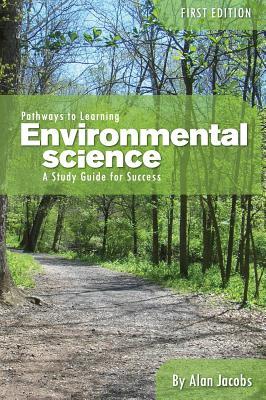
Pathways to Learning Environmental A Study Guide for Success is a workbook and study guide designed to be used in conjunction with standard required texts in environmental science and environmental studies courses. Used over the duration of a course, it enhances comprehension, increases retention, and improves test scores. The book contains tear-out pages that can easily be attached to class notes or other course materials. Chapters feature questions and fill in the blank exercises, allowing students to check their understanding of the subject matter, and assess their progress early on. Everything in the book is designed to answer the question "What do I need to know?". The fourteen chapters of the book cover the many areas involved in environmental science and environmental studies, including chemical, physical, biological, and earth science principles, earth spheres, and biomes. Also covered are environmental cycles, material and energy resources, pollution, and environmental laws and regulations. Each chapter begins with an explanation of the topic to be discussed, and indicates where in a textbook students can find complete discussions, figures, charts and tables. Chapter exercises are presented in multiple choice, fill in the blank, and matching formats, allowing students many opportunities for self-evaluation prior to taking class examinations. Of special note is the Rap City in Green feature of the book, which reviews major concepts in verse form. The musicality of the verses enhances appeal, and is a highly effective memory aid. Pathways to Learning Environmental Science is an excellent support tool for students in general education environmental science/studies courses.

Me? I Kill People
by Alan Jacobs
A story of forbidden love and dark crimes as a contract killer is chased by the one woman who cannot bring herself to catch him.Giles Penshurst is rich, picks his clients and always gets the job done. Sounds like the perfect life – except for one detail: he kills people for money. As a contract killer who stumbled into the life, Giles is meticulous about staying one step ahead of the police…even when the police in question is one woman determined to catch him red handed.The police know there is a killer on the loose and it’s only a matter of time before Hazel Frazer, policewoman, catches him. Ever since they met one night in the dark, she’s been obsessed with finding the contract killer’s identity. Everyone makes mistakes and Giles’ eventually catches up with him as Hazel discovers his identity. What happens next is a whirlwind of fast talking and falling in love against all odds, but as Giles escapes the police’s net to Brazil, will Hazel’s love prove greater than her duty? Or will Giles’ perfectly crafted life fall down around him?Me? I Kill People is a complex, intriguing crime novel with an insight into human nature and relationships that interlocks brilliantly with the twists and turns of a mystery story.
