
Aeschylus
Greek Αισχύλος , Esquilo in Spanish, Eschyle in French, Eschilo in Italian, Эсхил in Russian. Aeschylus (c. 525/524 BC – c. 456 BC) was an ancient Greek tragedian often described as the father of tragedy. Academic knowledge of the genre begins with his work, and understanding of earlier Greek tragedy is largely based on inferences made from reading his surviving plays. According to Aristotle, he expanded the number of characters in the theatre and allowed conflict among them. Formerly, characters interacted only with the chorus. Only seven of Aeschylus's estimated 70 to 90 plays have survived. There is a long-standing debate regarding the authorship of one of them, Prometheus Bound, with some scholars arguing that it may be the work of his son Euphorion. Fragments from other plays have survived in quotations, and more continue to be discovered on Egyptian papyri. These fragments often give further insights into Aeschylus' work. He was likely the first dramatist to present plays as a trilogy. His Oresteia is the only extant ancient example. At least one of his plays was influenced by the Persians' second invasion of Greece (480–479 BC). This work, The Persians, is one of very few classical Greek tragedies concerned with contemporary events, and the only one extant. The significance of the war with Persia was so great to Aeschylus and the Greeks that his epitaph commemorates his participation in the Greek victory at Marathon while making no mention of his success as a playwright.
29 Books Written

Volume I - Aeschylus• The Oresteia (Agamemnon/The Libation Bearers/The Eumenides)• The Suppliant Maidens• The Persians• Seven Against Thebes• Prometheus BoundVolume II - Sophocles• 'The Theban Plays' (Oedipus The King/Oedipus At Colonus/Antigone)• Ajax• The Women Of Trachis• Electra• PhiloctetesVolume III - Euripides 1 • Alcestis• The Medea• The Heracleidae• Hippolytus• Cyclops• Heracles• Iphigenia In Tauris• Helen• Hecuba• Andromache• The Trojan WomenVolume IV - Euripides 2• Ion• Rhesus• The Suppliant Women• Orestes• Iphigenia In Aulis• Electra• The Phoenicians• The Bacchae"These authoritative translations consign all other complete collections to the wastebasket."—Robert Brustein, The New Republic"This is it. No qualifications. Go out and buy it everybody."—Kenneth Rexroth, The Nation"The translations deliberately avoid the highly wrought and affectedly poetic; their idiom is contemporary....They have life and speed and suppleness of phrase."—Times Education Supplement"These translations belong to our time. A keen poetic sensibility repeatedly quickens them; and without this inner fire the most academically flawless rendering is dead."—Warren D. Anderson, American Oxonian"The critical commentaries and the versions themselves...are fresh, unpretentious, above all, functional."—Commonweal"Grene is one of the great translators."—Conor Cruise O'Brien, London Sunday Times"Richmond Lattimore is that rara avis in our age, the classical scholar who is at the same time an accomplished poet."—Dudley Fitts, New York Times Book Review
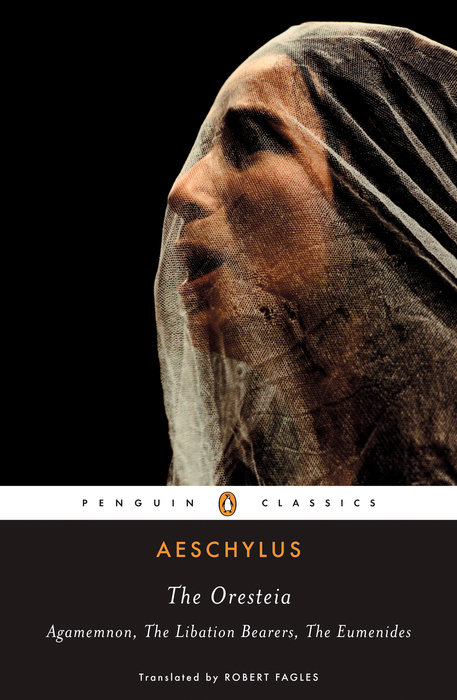
Alternate covers of this ISBN here, here, here, here. Most recent cover is here.In the Oresteia—the only trilogy in Greek drama which survives from antiquity—Aeschylus took as his subject the bloody chain of murder and revenge within the royal family of Argos.Moving from darkness to light, from rage to self-governance, from primitive ritual to civilized institution, their spirit of struggle and regeneration becomes an everlasting song of celebration.

Treating ancient plays as living drama. Classical Greek drama is brought vividly to life in this series of new translations. Students are encouraged to engage with the text through detailed commentaries, including0 suggestions for discussion and analysis. In addition, numerous practical questions stimulate ideas on staging and encourage students to explore the play's dramatic qualities. Agamemnon is suitable for students of both Classical Civilisation and Drama. Useful features include full synopsis of the play, commentary alongside translation for easy reference and a comprehensive introduction to the Greek Theatre. Agamemnon is aimed primarily at A-level and undergraduate students in the UK, and college students in North America.
For readers accustomed to the relatively undramatic standard translations of Prometheus Bound , this version by James Scully, a poet and winner of the Lamont Poetry Prize, and C. John Herington, one of the world's foremost Aeschylean scholars, will come as a revelation. Scully and Herington accentuate the play's true power, drama, and relevance to modern times. Aeschylus originally wrote Prometheus Bound as part of a tragic trilogy, and this translation is unique in including the extant fragments of the companion plays.
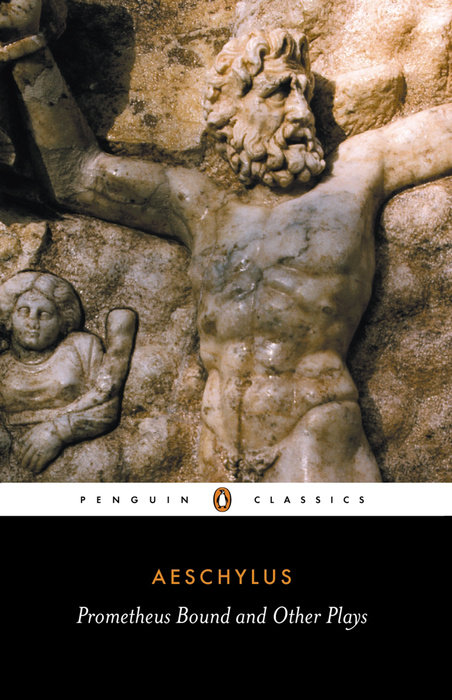
Aeschylus (525–456 BC) brought a new grandeur and epic sweep to the drama of classical Athens, raising it to the status of high art. In Prometheus Bound the defiant Titan Prometheus is brutally punished by Zeus for daring to improve the state of wretchedness and servitude in which mankind is kept. The Suppliants tells the story of the fifty daughters of Danaus who must flee to escape enforced marriages, while Seven Against Thebes shows the inexorable downfall of the last members of the cursed family of Oedipus. And The Persians, the only Greek tragedy to deal with events from recent Athenian history, depicts the aftermath of the defeat of Persia in the battle of Salamis, with a sympathetic portrayal of its disgraced King Xerxes.Philip Vellacott’s evocative translation is accompanied by an introduction, with individual discussions of the plays, and their sources in history and mythology.

Sommerstein presents a freshly constituted text, with introduction and commentary, of Eumenides, the climactic play of the only surviving complete Greek tragic trilogy, the Oresteia of Aeschylus. Of all Athenian tragic dramas, Eumenides is most consciously designed to be relevant to the situation of the Athenian state at the time of its performance (458 B.C.) and seems to have contained daring innovations both in technique and in ideas. The introduction and commentary to this edition seek to bring out how Aeschylus shaped to his purpose the legends he inherited, and ended the tragic story of Agamemnon's family in a celebration of Athenian civic unity and justice. The commentary also pays attention to the linguistic, metrical and textual problems to be encountered by the reader.

The Persians is a Greek tragedy written by Aeschylus in 472 BCE. The play is based on the Persian Wars, specifically the Battle of Salamis in 480 BCE, which was a decisive victory for the Greeks. The play opens with the arrival of a messenger from the Persian court, who brings news of the defeat of the Persian army and the death of King Xerxes' brother. The rest of the play is a series of lamentations and reflections on the tragedy of war, as the Persian court and people come to terms with their loss. The chorus, made up of elderly Persians, serves as a voice of reason and wisdom, urging the characters to accept their fate and learn from their mistakes. The play is notable for its sympathetic portrayal of the Persians, who are typically depicted as barbarians in Greek literature. Aeschylus' portrayal of the Persians as human beings with complex emotions and motivations has been praised for its empathy and insight into the human condition. The Persians is considered one of Aeschylus' greatest works and a masterpiece of Greek tragedy.The mighty Xerxes from Darius sprung, The stream of whose rich blood flows in our veins, Leads against Greece; whether his arrowy shower Shot from the strong-braced bow, or the huge spear High brandish'd, in the deathful field prevails.This scarce antiquarian book is a facsimile reprint of the old original and may contain some imperfections such as library marks and notations. Because we believe this work is culturally important, we have made it available as part of our commitment for protecting, preserving, and promoting the world's literature in affordable, high quality, modern editions, that are true to their original work.

Produced in 458 BC, Aeschylus' Choephori is the second play in the Oresteian trilogy. Many years after king Agamemnon's murder at the hands of his wife Clytamnestra and her lover Aigisthos, his son Orestes returns home with Pylades to mourn at his grave. He has been living in exile and has come back to Argos in secret; his mission is to avenge Agamemnon's death.

Third play of a trilogy (the other two are lost) about the doomed family of Laius and Oedipus and his sons. After the city of Thebes has banished Oedipus, the former ruler's sons vie for the crown. The victor, Eteocles, expels his brother, Polyneices, who then recruits 7 champions to lead an assault on Thebes, with a tragic results.

A shrine is stronger than a tower to save, A shield that none may cleave. Step swift thereto, And in your left hands hold with reverence The white-crowned wands of suppliance, the sign Beloved of Zeus, compassion's lord, and speak To those that question you, words meek and low And piteous, as beseems your stranger state,

Three masterpieces of classical tragedyContaining Aeschylus's Agamemnon , Sophocles' Oedipus Rex , and Euripides' Medea , this important new selection brings the best works of the great tragedians together in one perfect introductory volume. This volume also includes extracts from Aristophanes' comedy The Frogs and a selection from Aristotle's Poetics .For more than seventy years, Penguin has been the leading publisher of classic literature in the English-speaking world. With more than 1,700 titles, Penguin Classics represents a global bookshelf of the best works throughout history and across genres and disciplines. Readers trust the series to provide authoritative texts enhanced by introductions and notes by distinguished scholars and contemporary authors, as well as up-to-date translations by award-winning translators.

Aeschylus II: The Oresteia: Agamemnon, The Libation Bearers, The Eumenides, Proteus
by Aeschylus
Rating: 4.0 ⭐
Aeschylus II contains “The Oresteia,” translated by Richmond Lattimore, and fragments of “Proteus,” translated by Mark Griffith.Sixty years ago, the University of Chicago Press undertook a momentous project: a new translation of the Greek tragedies that would be the ultimate resource for teachers, students, and readers. They succeeded. Under the expert management of eminent classicists David Grene and Richmond Lattimore, those translations combined accuracy, poetic immediacy, and clarity of presentation to render the surviving masterpieces of Aeschylus, Sophocles, and Euripides in an English so lively and compelling that they remain the standard translations. Today, Chicago is taking pains to ensure that our Greek tragedies remain the leading English-language versions throughout the twenty-first century.In this highly anticipated third edition, Mark Griffith and Glenn W. Most have carefully updated the translations to bring them even closer to the ancient Greek while retaining the vibrancy for which our English versions are famous. This edition also includes brand-new translations of Euripides’ Medea, The Children of Heracles, Andromache, and Iphigenia among the Taurians, fragments of lost plays by Aeschylus, and the surviving portion of Sophocles’s satyr-drama The Trackers. New introductions for each play offer essential information about its first production, plot, and reception in antiquity and beyond. In addition, each volume includes an introduction to the life and work of its tragedian, as well as notes addressing textual uncertainties and a glossary of names and places mentioned in the plays.In addition to the new content, the volumes have been reorganized both within and between volumes to reflect the most up-to-date scholarship on the order in which the plays were originally written. The result is a set of handsome paperbacks destined to introduce new generations of readers to these foundational works of Western drama, art, and life.


A landmark anthology of the masterpieces of Greek drama, featuring all-new, highly accessible translations of some of the world's most beloved plays, including Agamemnon, Prometheus Bound, Bacchae, Electra, Medea, Antigone, and Oedipus the KingFeaturing translations by Emily Wilson, Frank Nisetich, Sarah Ruden, Rachel Kitzinger, Mary Lefkowitz, and James RommThe great plays of Ancient Greece are among the most enduring and important legacies of the Western world. Not only is the influence of Greek drama palpable in everything from Shakespeare to modern television, the insights contained in Greek tragedy have shaped our perceptions of the nature of human life. Poets, philosophers, and politicians have long borrowed and adapted the ideas and language of Greek drama to help them make sense of their own times.This exciting curated anthology features a cross section of the most popular--and most widely taught--plays in the Greek canon. Fresh translations into contemporary English breathe new life into the texts while capturing, as faithfully as possible, their original meaning.This outstanding collection also offers short biographies of the playwrights, enlightening and clarifying introductions to the plays, and helpful annotations at the bottom of each page. Appendices by prominent classicists on such topics as "Greek Drama and Politics," "The Theater of Dionysus," and "Plato and Aristotle on Tragedy" give the reader a rich contextual background. A detailed time line of the dramas, as well as a list of adaptations of Greek drama to literature, stage, and film from the time of Seneca to the present, helps chart the history of Greek tragedy and illustrate its influence on our culture from the Roman Empire to the present day.With a veritable who's who of today's most renowned and distinguished classical translators, The Greek Plays is certain to be the definitive text for years to come.Praise for The Greek Plays"Mary Lefkowitz and James Romm deftly have gathered strong new translations from Frank Nisetich, Sarah Ruden, Rachel Kitzinger, Emily Wilson, as well as from Mary Lefkowitz and James Romm themselves. There is a freshness and pungency in these new translations that should last a long time. I admire also the introductions to the plays and the biographies and annotations provided. Closing essays by five distinguished classicists--the brilliant Daniel Mendelsohn and the equally skilled David Rosenbloom, Joshua Billings, Mary-Kay Gamel, and Gregory Hays--all enlightened me. This seems to me a helpful light into our gathering darkness."--Harold Bloom

Essa peça é considerada única entre as tragédias remanescentes do período por retratar um evento histórico - a guerra entre os gregos e os persas – em vez de dramatizar uma época distante, de heróis míticos. A peça gira em torno do desastre em que os invasores da Grécia viram suas forças navais aniquiladas pelos gregos na Batalha de Salamina.A ação se passa na capital persa onde um mensageiro leva à rainha a notícia do desastre. Depois de atribuir a derrota da Pérsia a independência e bravura gregas assim como ao castigo dos deuses aos persas por terem ido além dos limites da Ásia, a peça termina com o retorno do rei Xerxes, falido e humilhado, confirmando a extinção do poderio persa.

دو هزار و پانصد سال از تولد تراژدی میگذرد و گزافه نیست اگر بگوییم این نوشتههای شکوهمند از دوران رنسانس به بعد از سرچشمههای اصلی ادبیات غرب و الهامبخش بسیاری از شاعران و نویسندگان و سایر هنرمندان سراسر جهان بوده است.آیسخولوس را پدر تراژدی مینامند، از آن روی که اون نخستین شاعری است که با نوآوریهای خود، چه در پرداخت مضامین و شخصیتها و چه در نحوهی اجرای نمایشنامه بر صحنه، این قالب هنری را تکامل بخشید. مضمون نمایشنامههای آیسخولوس بیش از هر چیز بر رابطهی آدمی با خدایان استوار است. بسیاری از پرسشهای ازلی انسان در این نوشتهها مطرح میشود: آدمی تا چه حد مسئول کردههای خویش است و تا چه حد محکوم رأی خدایان؟ آنگاه که اراده و آرزوی آدمی با خواست خدایان در تعارض میافتد چه پیش میآید؟ عدالت خدایان به چه معنی است؟ و سرنوشت آدمی آنگاه که از بسیاری قدرت و مکنت سر به طغیان برمیدارد، به کجا میکشد؟علاوه بر این آیسخولوس رویدادهای مهم زمانهی خود را در نمایشنامههایش بازتاب داده است.این مجموعه برای نخستینبار هفت نمایشنامهی برجامانده از آیسخولوس را با ترجمهای واحد به فارسیزبانان هدیه میکند.

La tragedia è ambientata a Susa, la residenza del re di Persia, dove Atossa, madre del regnante Serse, ed i dignitari di corte attendono con ansia l'esito della battaglia di Salamina (480 a.C.). In un'atmosfera cupa e colma di presagi funesti, la regina racconta un sogno angoscioso fatto quella notte. Poco dopo arriva un messaggero, che porta l'annuncio della totale disfatta dei Persiani. La battaglia viene raccontata accuratamente, dapprima con la descrizione delle flotte, poi con l'analisi della fasi dello scontro e infine con il quadro desolante delle navi distrutte in mare e dei soldati superstiti privi di aiuto. Lamenti e pianti riempiono la scena fino alla comparsa del defunto padre di Serse, Dario, marito di Atossa. Lo spettro dà una spiegazione etica alla disfatta militare, giudicandola la giusta punizione per la hýbris (tracotanza) di cui si è macchiato il figlio, nell'aver osato cercare di conquistare il Mar Egeo con la sua flotta.

This book was converted from its physical edition to the digital format by a community of volunteers. You may find it for free on the web. Purchase of the Kindle edition includes wireless delivery.

The Grene and Lattimore edition of the Greek tragedies has been among the most widely acclaimed and successful publications of the University of Chicago Press. On the occasion of the Centennial of the University of Chicago and its Press, we take pleasure in reissuing this complete work in a handsome four-volume slipcased edition as well as in redesigned versions of the familiar paperbacks. For the Centennial Edition two of the original translations have been replaced. In the original publication David Grene translated only one of the three Theban plays, Oedipus the King. Now he has added his own translations of the remaining two, Oedipus at Colonus and Antigone, thus bringing a new unity of tone and style to this group. Grene has also revised his earlier translation of Prometheus Bound and rendered some of the former prose sections in verse. These new translations replace the originals included in the paperback volumes Sophocles I (which contains all three Theban plays), Aeschylus II, Greek Tragedies, Volume I, and Greek Tragedies, Volume III, all of which are now being published in second editions. All other volumes contain the translations of the tragedies of Aeschylus, Sophocles, and Euripides for the most part from the original versions first published in the 1940s and 1950s. These translations have been the choice of generations of teachers and students, selling in the past forty years over three million copies.

Œuvre de l'aîné des trois grands tragiques athéniens, unique trilogie dramatique que l'Antiquité nous ait léguée, L'Orestie, dont Les Choéphores et Les Euménides forment les deux derniers volets, relate le passage de la loi du talion à la justice instituée. Meurtre pour meurtre, ruine pour ruine, sang pour sang : telle est la loi des dieux lorsque s'ouvre Les Choéphores. Pour venger son père Agamemnon, Oreste doit tuer sa propre mère, Clytemnestre, et l'amant de celle-ci... Mais ce meurtre déclenche la fureur des érinyes, qui se lancent à la poursuite du matricide pour le châtier. Accusé d'un crime de sang auquel pourtant le respect de la justice divine l'a contraint, Oreste, dans Les Euménides, implore l'aide d'Athéna : en instaurant le tribunal de l'Aréopage pour le juger, elle mettra un terme au cycle infernal de la vengeance.

Libro usado en buenas condiciones, por su antiguedad podria contener señales normales de uso

Three classic Greek tragedies are translated and critically introduced byEdith Hamilton.

La disperata rievocazione della battaglia navale di Salamina da parte dei persiani sconfitti e l'assalto dei sette eroi argivi contro la città di Tebe, culminato nel duello fratricida tra i due figli di Edipo, Eteocle e Polinice. Due drammi di straordinaria potenza evocativa, andati in scena nel 472 e nel 467 a.C.

* AeschylusThe Suppliant MaidensThe PersiansSeven Against ThebesPrometheus BoundAgamemnonChoephoroeThe Eumenides* SophoclesOedipus the KingOedipus at ColonusAntigoneAjaxElectraThe TrachiniaePhiloctetes* EuripidesRhesusMedeaHippolytusAlcestisHeracleidaeThe SuppliantsTrojan WomenIonHelenAndromacheElectraBacchantesHecubaHeracles MadPhoenician WomenOrestesIphigeneia in TaurisIphigeneia at AulisCyclops* AristophanesThe AcharniansThe KnightsThe CloudsThe WaspsPeaceThe BirdsThe FrogsLysistrataThesmophoriazusaeEcclesiazousaePlutus

This massive anthology of philosophy contains over 75 works by a dozen of the most know philosophers of all time. An active table of contents makes it easy to quickly to the work you want.Authors and books include:Aeschylus:AgamemnonBound and Seven Against ThebesThe House of AtreusMaidens and Other PlaysAristotle:The Athenian ConstitutionThe CategoriesEthicsThe Poetics of AristotleFrancis Bacon:The Advancement of LearningThe Essays of Francis BaconThe New AtlantisValerius TerminusGeorge Berkeley:An Essay Towards a New Theory of VisionThe QueristThree Dialogues between Hylas and PhilonousA Treatise Concerning the Principles of Human KnowledgeGiordano Bruno:An Ethical PoemRene Descartes:A Discourse on MethodPrinciples of PhilosophyEuripides:AlcestisThe ElectraHippolytus & The BacchaeTragedies of EuripidesThe Trojan WomenThomas Hobbes:LeviathanHomer:The IliadOdysseyDavid Hume:Dialogues Concerning Natural ReligionAn Enquiry Concerning Human UnderstandingThe History of England: From the Invasion of Julius Caesar to the Revolution in 1688A Treatise of Human NatureImmanuel Kant:The Critique of Practical ReasonThe Critique of Pure ReasonFundamental Principals of the Metaphysic of MoralsThe Metaphysical Elements of EthicsJohn Locke:An Essay Concerning Humane Understanding: Volume 1An Essay Concerning Humane Understanding: Volume 2A Letter Concerning TolerationTwo Treatises of GovernmentPlato:Alcibiades IAlcibiades IIApologyCharmidesCratylusCritiasCritoEuthydemusEuthyphroGorgiasIonLachesLesser HippiasLysisMenexenusMenoParmenidesPhaedoPhaedrusProtagorasThe RepublicSophistStatesmanSymposiumTheaetetusTimaeusJean Jacques Rousseau:The Confessions of Jean Jacques RousseauA Discourse Upon The Origin And The Foundation Of The Inequality Among MankindEmileSophocles:Oedipus the KingBenedict de Spinoza:The EthicsOn the Improvement of the UnderstandingA Theologico-Political Treatise: Part IA Theologico-Political Treatise: Part IIA Theologico-Political Treatise: Part IIIA Theologico-Political Treatise: Part IV

Eski Yunan tragedyaları dizisinin bu ilk kitabında, usta oyun yazarı Güngör Dilmen'in eski Yunanca asıllarından manzum olarak çevirdiği iki oyun yer alıyor. Persler'de, Yunan tragedyasının babası sayılan Aiskhülos, kendisinin de katıldığı, Salamis deniz savaşını (İ.Ö. 480) ve sonuçlarını anlatır. Bu savaş, demokratik bir yönetime sahip Atina halkının, kendi seçtikleri önderlerinin arkasında, sayıca çok üstün ordusuyla saldırgan Pers kralına karşı verdikleri 'özgürlük' mücadelesidir. Antigone tragedyası, Sofokles'in ve Yunan tragedyalarının başyapıtlarından biridir. Kral Kreon'un 'ceberut' devlet anlayışına başkaldıran oyunun kadın kahramanı Antigone, günümüzde hâlâ gündemde olan 'insan hakları' ve 'birey özgürlüğünü' savunur. Kitapta ayrıca, Dilmen'in, bu oyunlarla yazarları üzerine ayrıntılı bir yazısı bulunmakta.

Edizioni integraliESCHILO• I Persiani • I Sette a Tebe • Le supplici • Prometeo incatenato • Agamennone • Le Coefore • Le EumenidiSOFOCLE• Antigone • Aiace • Èdipo re • Elettra • Filottete • Le Trachinie • Èdipo a Colono • I segugiEURIPIDE• Alcesti • Medea • Ippolito • Gli Eraclidi • Ecuba • Andromaca • Le supplici • Eracle • Le troiane • Elettra • Elena • Ifigenia Taurica • Ione • Le fenicie • Oreste • Ifigenia in Aulide • Le Baccanti • Reso • Il CiclopeAltissima espressione poetica, nonché specchio degli sviluppi politici della polis ateniese nell’epoca classica, la tragedia greca è giunta fino a noi attraverso i secoli mantenendo inalterato il fascino archetipico che ne costituisce l’impronta originaria. Nella rielaborazione drammatica del mito rivivono le convinzioni del singolo poeta ma anche l’eco delle discussioni e della vita civile e morale di un popolo. Così i personaggi di Eschilo non sono più semplici mortali in balia di forze cieche e oscure, ma uomini e donne coscienti e responsabili delle proprie scelte, vittime e colpevoli insieme (basti pensare a Clitennestra), spesso stupendamente delineati nella loro profondità emotiva. Sofocle rispecchia nelle sue opere l’ideale di sereno equilibrio che permeava la cultura greca in quegli anni. Eppure, nelle sue tragedie la lucida consapevolezza dell’infelicità umana, unita al sentimento della dignità insita in ogni sofferenza, e l’analisi razionale coesistono con la percezione di pulsioni insondabili cui soggiace il destino degli uomini (si pensi a Antigone o Elettra o Èdipo). Profondo conoscitore dell’animo umano, Euripide ha creato indimenticabili figure tragiche, da Alcesti a Medea, a Oreste, scegliendo i suoi argomenti tra i miti meno noti e soffermandosi su aspetti secondari dei grandi cicli epici ed eroici. Le sue opere hanno influenzato attraverso i secoli il teatro di tutti i tempi: da quello romano a quello rinascimentale e barocco, dai romantici a D’Annunzio, fino ai giorni nostri.


Includes the following works:Prometheus Bound - Traditionally attributed to Aeschylus, this ancient Greek tragedy retells the myth of Prometheus, a Titan who was punished by the god Zeus for giving fire to mankind.Prometheus UnBound - A four-act play by Percy Bysshe Shelley first published in 1820, concerned with the torments of the Greek mythological figure Prometheus and his suffering at the hands of Zeus. It is inspired by Aeschylus' Prometheus Bound and concerns Prometheus' release from captivity.Source: Wikipedia