
Aaron Bobrow-Strain
Aaron Bobrow-Strain is a professor of politics at Whitman College, where he teaches courses dealing with food, immigration, and the U.S.-Mexico border. His writing has appeared in Believer, The Chronicle of Higher Education Review, Salon, and Gastronomica. Along with The Death and Life of Aida Hernandez: A Border Story, he is the author of White Bread: A Social History of the Store-Bought Loaf and Intimate Enemies: Landowners, Power, and Violence in Chiapas. In the 1990s, he worked on the U.S.-Mexico border as an activist and educator. He is a founding member of the Walla Walla Immigrant Rights Coalition in Washington State.
4 Books Written
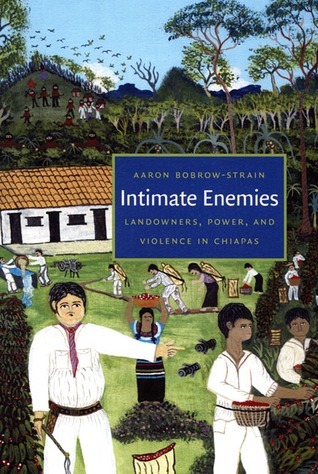
Intimate Enemies is the first book to explore conflicts in Chiapas from the perspective of the landed elites, crucial but almost entirely unexamined actors in the state’s violent history. Scholarly discussion of agrarian politics has typically cast landed elites as “bad guys” with predetermined interests and obvious motives. Aaron Bobrow-Strain takes the landowners of Chiapas seriously, asking why

How did white bread, once an icon of American progress, become “white trash”? In this lively history of bakers, dietary crusaders, and social reformers, Aaron Bobrow-Strain shows us that what we think about the humble, puffy loaf says a lot about who we are and what we want our society to look like. White Bread teaches us that when Americans debate what one should eat, they are also wr

What happens when an undocumented teen mother takes on the U.S. immigration system?When Aida Hernandez was born in 1987 in Agua Prieta, Mexico, the nearby U.S. border was little more than a worn-down fence. Eight years later, Aida's mother took her and her siblings to live in Douglas, Arizona. By then, the border had become one of the most heavily policed sites in America.

A Yucatan-based American tries to re-create the '50s-era market-tested USDA White Pan Loaf No. 1, and in doing so reveals how today's miracle food can become tomorrow's catastrophe.